~~ Book Published by T. Hasegawa ~~
Sword & Blossom Poems
Volume II of a Three Volume Set
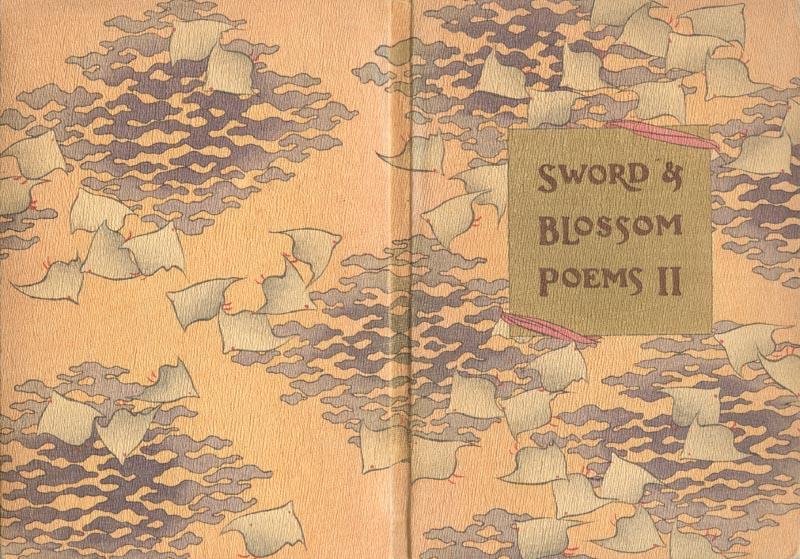
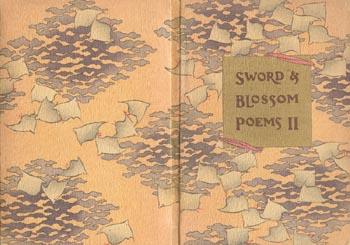
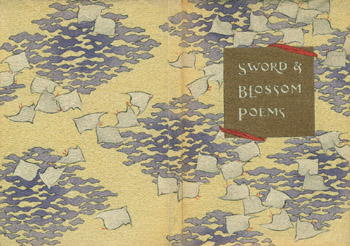
First Printing, Cover with Volume Number "II"
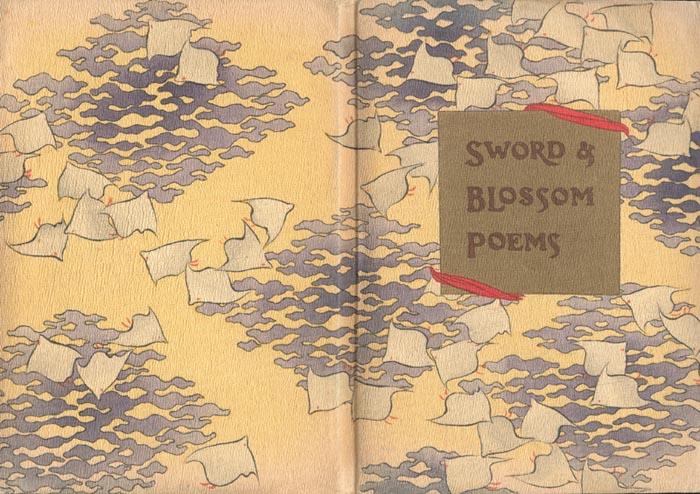
First Printing, Cover without Volume Number
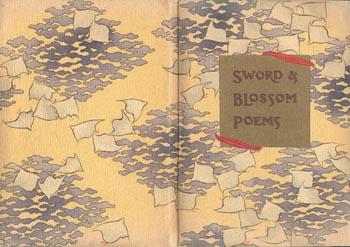
Second Printing
Hasegawa, T. (Publisher)
Kimura, Shotaro
Peake, Charlotte M. A.:
Sword and Blossom Poems from the Japanese, Volume II, T. Hasegawa, Tokyo, Japan, 1908~c1914, large 16mo (5 x 7 1/4 in - 12.5 x 18 cm), crepe over padded board covers, contents printed on hosho paper (high quality paper), 34 pp. This page count does not count the covers or a front free page. This is volume two from the three volume set of "Sword and Blossom" poems. The first Blossom song is "Sorrow" and the first Sword song is "A Patriot". I have seen the first printing of this volume with two slightly different covers (shown above). One cover has the volume number "II" while the other does not.
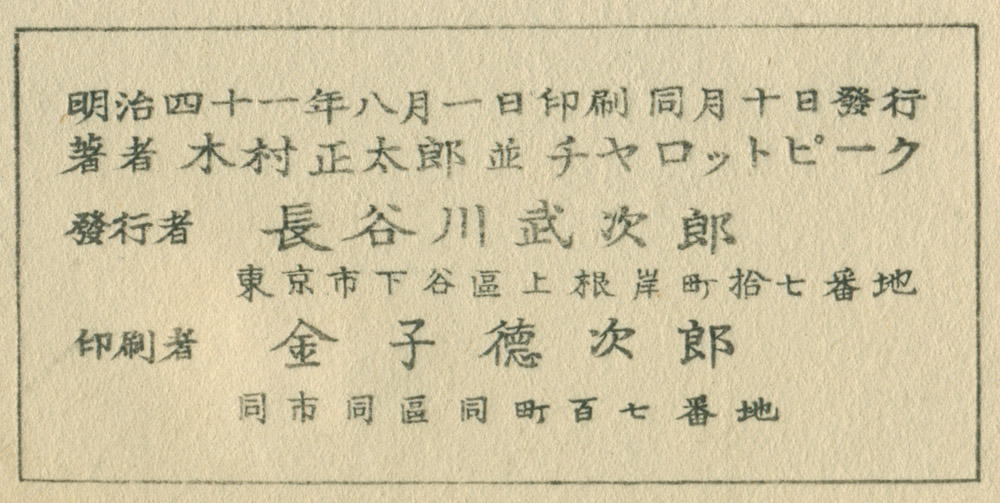
The first printing indicates a printing and publication date of August, Meiji 41 (1908). The volume lists the 38 Yotsuya Honmura address on the title page and in the colophon.
There is a second printing of this volume. It lists the same printing and publication dates as the first printing. However, it carries the 17 Kami Negishi address on the title page and in the colophon.
Binding format. The binding format for these books is not one that was typically employed by Hasegawa. The pages are joined to the binding at the middle. This allows for a seamless panoramic views of the prints when a page/plate is opened. The resulting outside edges were normally (but not always) lightly glued to the outside edge of the next page/plate. Other Hasegawa folded page books were bound with the page/plate folded and the open edges joined to the binding at the spine.
First Printing, 38 Honmura on title page
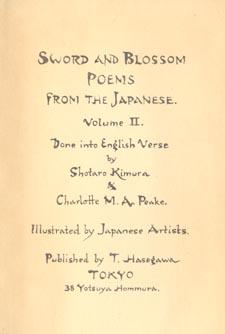
Second Printing, 17 Kami Negishi on title page
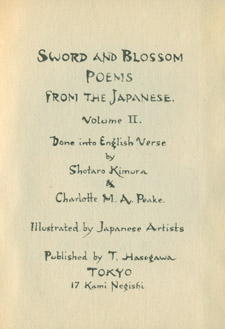
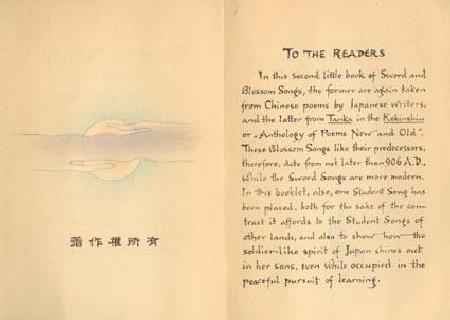
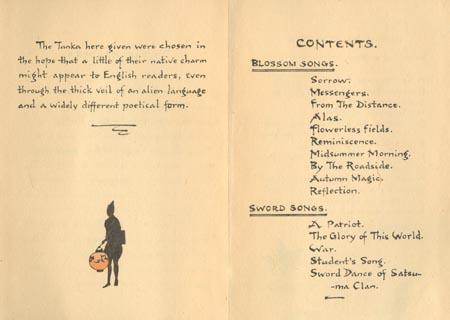
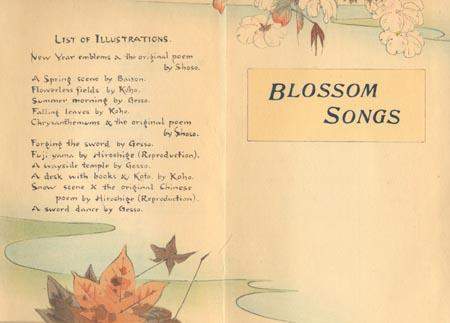
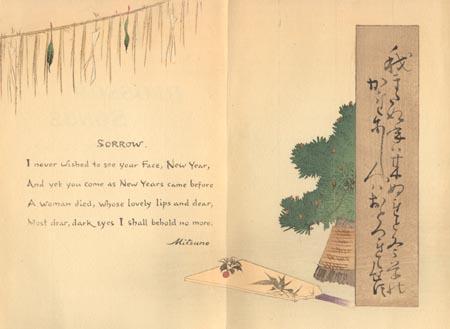
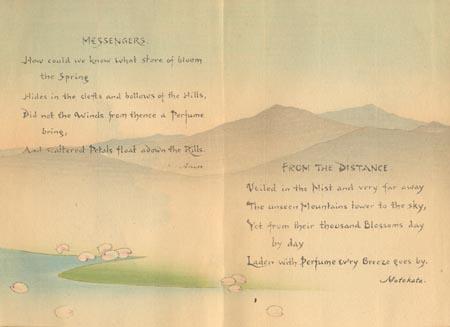
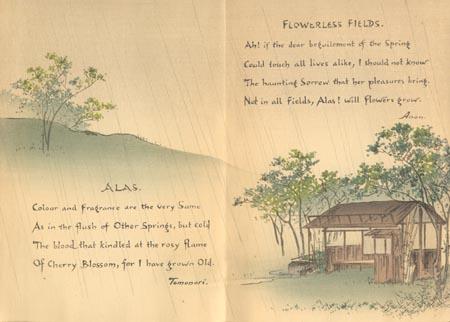
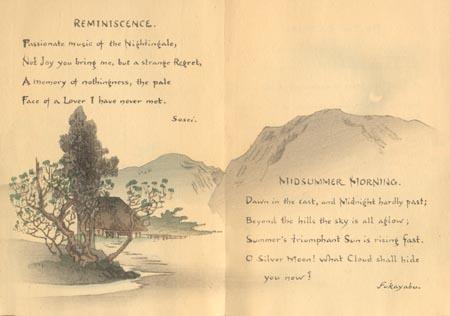
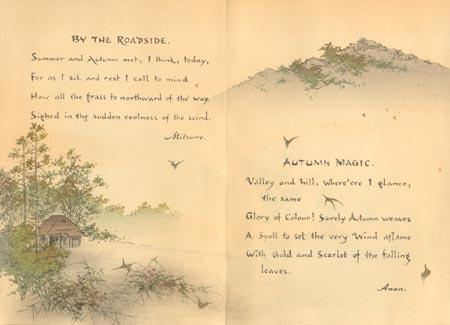
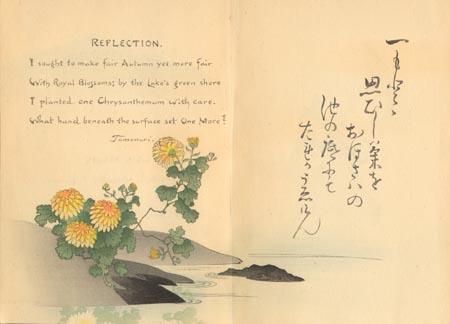
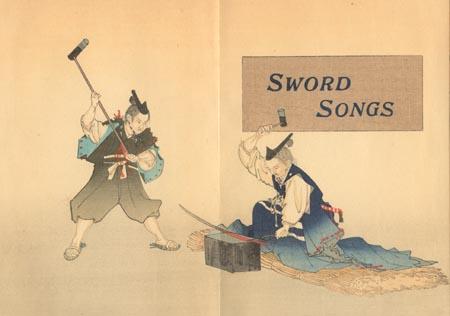
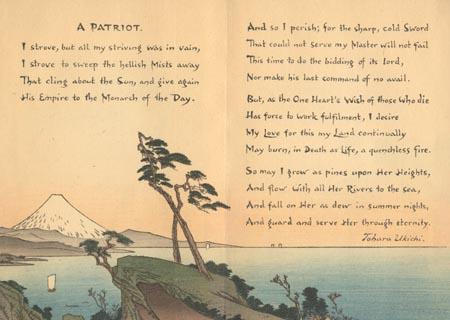
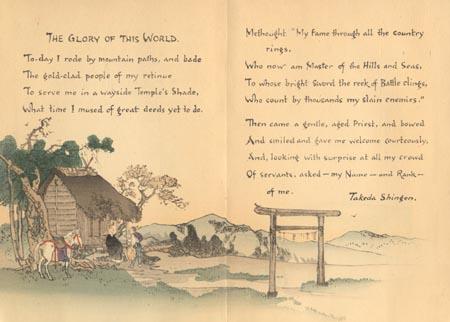
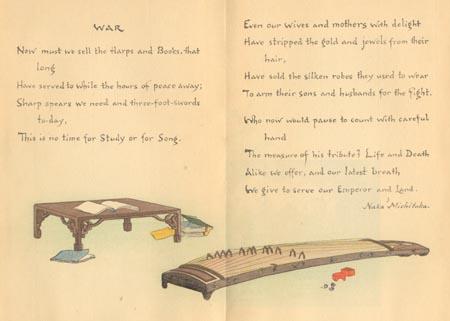
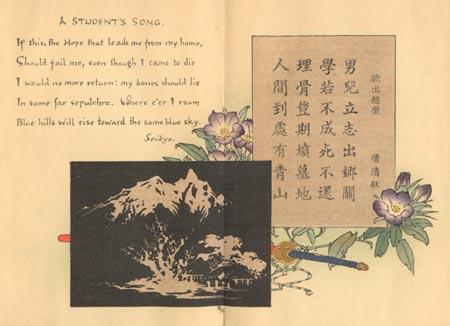
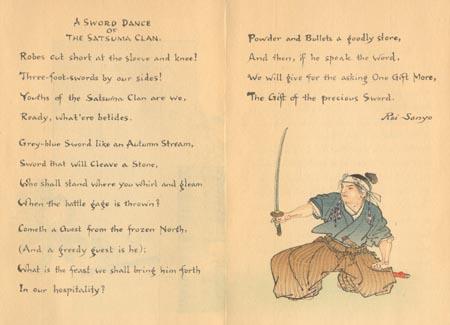
First Printing
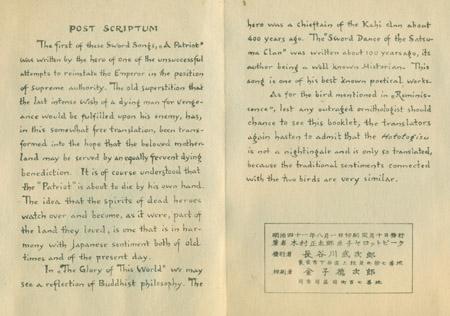
Second Printing
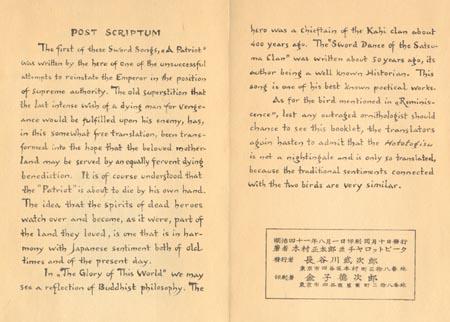
Colophon, First Printing
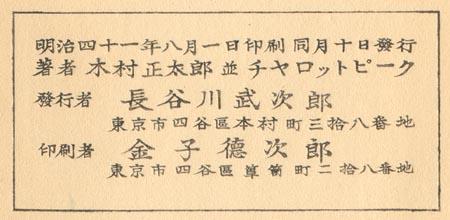
Printed: Meiji 41 (1908).8.1
Published: Meiji 41 (1908).8.10
Address: 38 Yotsuya Honmura
Colophon, Second Printing
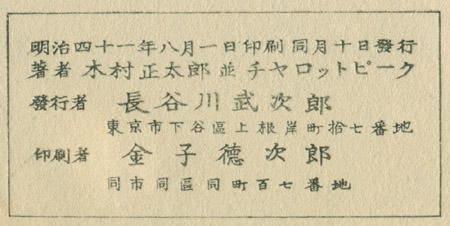
First Printing Printed: Meiji 41 (1908).8.1
First Printing Published: Meiji 41 (1908).8.10
Second Printing Printed and Published: Not stated, c1914 (presumed based on address)
Address: 17 Kami Negishi
Summary of the Three Volume Set
1907~c1914, Shotaro Kimura and Charlotte M. A. Peake, Sword and Blossom: Poems from the Japanese, T. Hasegawa, Tokyo, 118 pages, many with woodblock color illustrations, large 16mo (5 x 7 1/4 in - 12.5 x 18 cm), crepe over padded board covers, hosho paper (high quality paper) pages, 3 volume set. The "Blossom" poems are short unrhymed verse known as Tanka which were written date from the Kokinshu, 900 AD. The "Sword" poems are Chinese poems by Japanese writers from a more modern time. The 3rd volume also contains a section of "Love" poems which were also written pre-10th Century. The three books were sold in 1910~11 as a set and marketed in a wrap-around case with ivory clasps.
Sword and Blossom Poems from Japan, Volume I
Shotaro Kimura and Charlotte M. Peake
First Printing Printed and Published: November 1907
Second Printing Printed and Published: February 1909
Third Printing Printed and Published: c1914 (not dated in colophon)
Format: Large 16mo, crepe padded covers, hosho paper*
Length: 34 pages
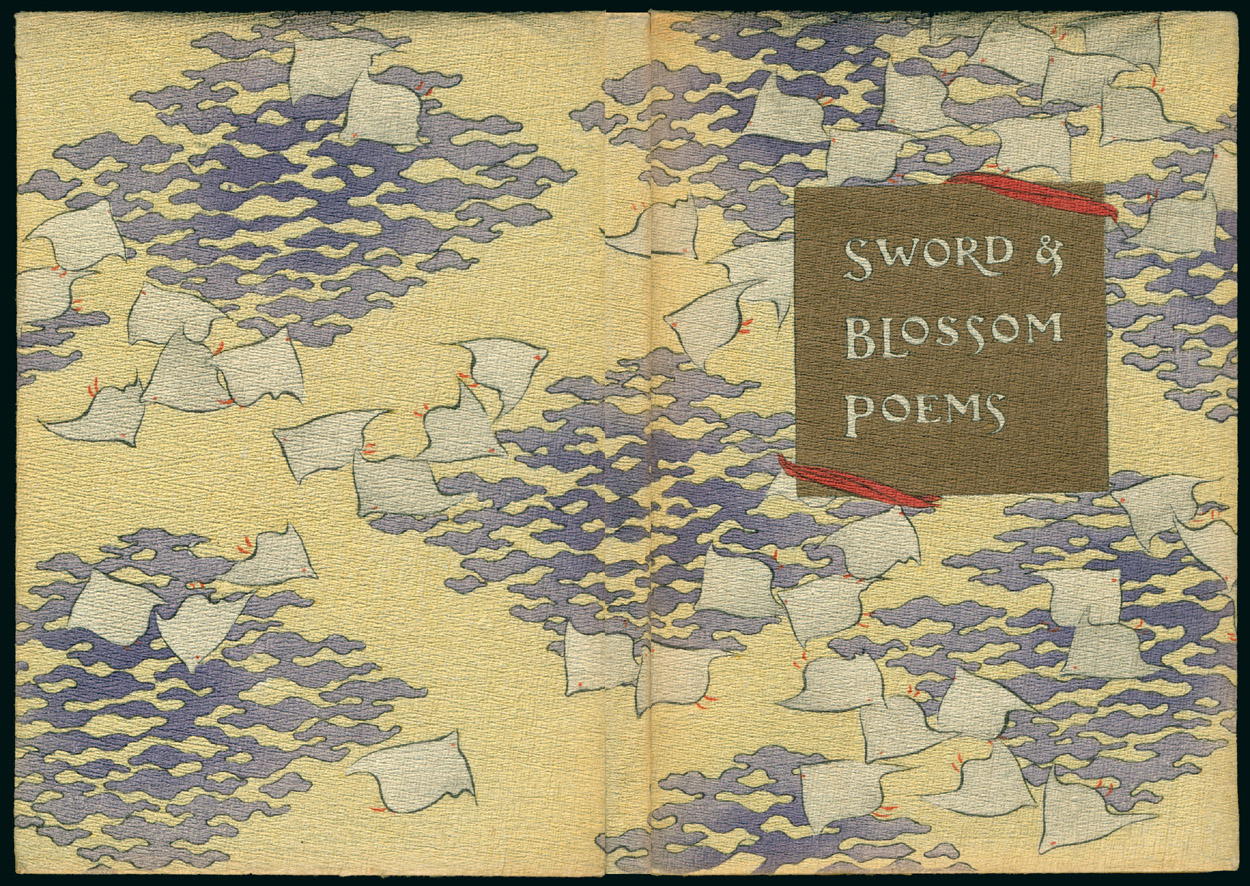
Volume Number: No volume number stated on the front cover.
Artists: Kason, Koho, Shoso and Yoshimune
Sword and Blossom Poems from Japan, Volume II
Shotaro Kimura and Charlotte M. Peake
First Printing Printed and Published: August 1908
Second Printing Printed and Published: c1914 (not dated in colophon)
Format: Large 16mo, crepe padded covers, hosho paper*
Length: 34 pages
Volume Number: Published with and without the volume number (II) on the front cover.
Artists: Baison, Koho and Shoso
Sword and Blossom Poems from Japan, Volume III
Shotaro Kimura and Charlotte M. Peake
First Printing Printed & Published: October 1910
Second Printing Printed and Published: c1914 (not dated in colophon)
Format: Large 16mo, crepe padded covers, hosho paper*
Length: 54 pages
Volume Number: No volume number stated on the front cover.
Artists: Baison, Koho and Yoshimune
Large 16mo format for all three books is 5 x 7 1/4 in - 12.5 x 18 cm.
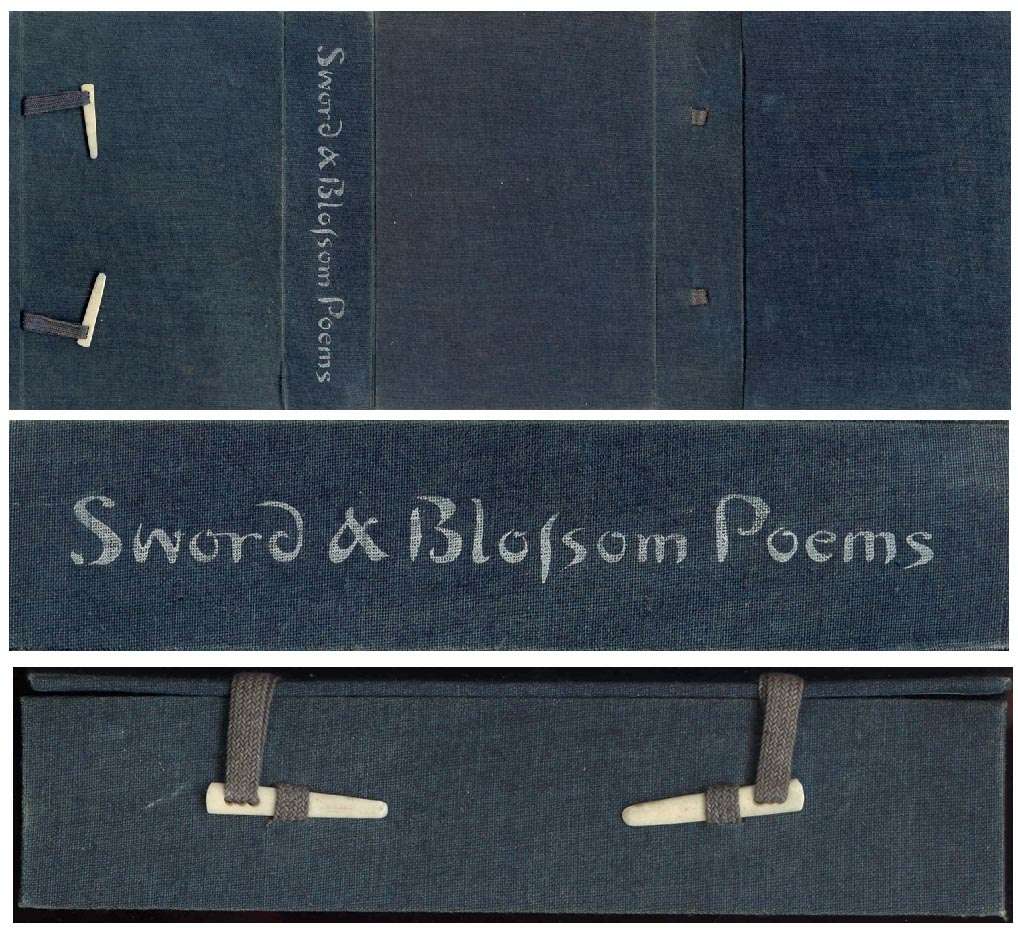
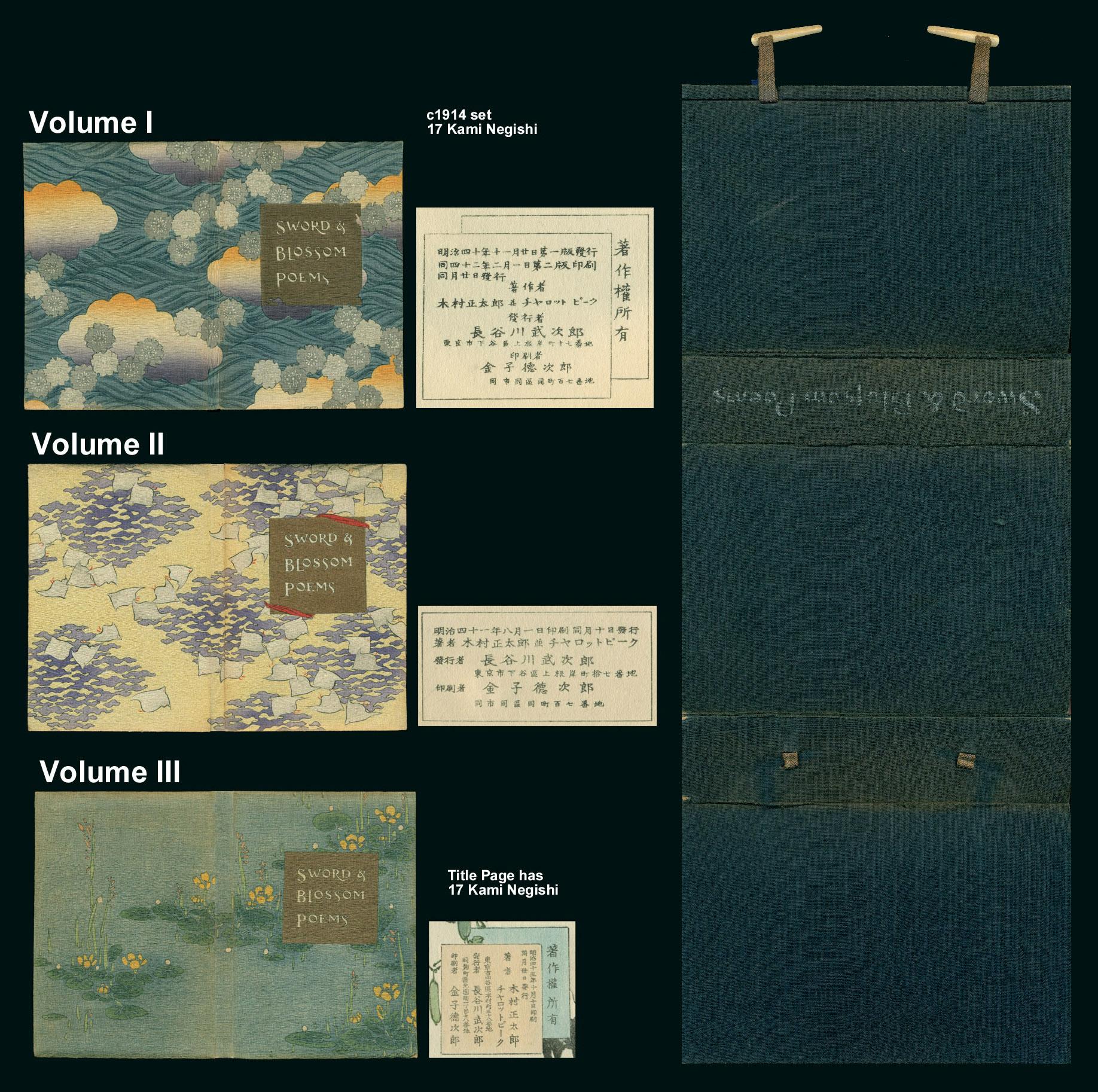
Three Volume Set. The three books were marketed in 1910-c1920 period as a set and sold in padded and unpadded wrap-around cases (generally blue with "Sword and Blossom Poems" in silver on the spine of the case and with ivory clasps). To see this case (unpadded version), click here. It is my experience with sets in these folding cases that the following books were included:
Matched Set, c1914, all three volumes with the 17 Kami Negishi address in the colophon. To see the covers, colophons and case for this set, click here.
Unmatched Set.
- Volume 1. February 1909 (2nd printing).
- Volume 2. August 1908 (1st printing - no volume number on front cover).
- Volume 3. c1914, (2nd printing - ie Kami Negishi address on the title page).
Deluxe Edition. A deluxe edition of the second volume has been reported but I have not examined one.
* Hosho paper is a traditional, high-quality kozo (mulberry) paper, which is strong and absorbent. It does not shrink or tear easily and is well suited for woodblock printing. Relatively speaking, hosho paper is expensive. The paper is made from made from the inner bark of the mulberry tree.
To return to the main T. Hasegawa page, click here.
|