Japan Fine Arts Association (compiled by):
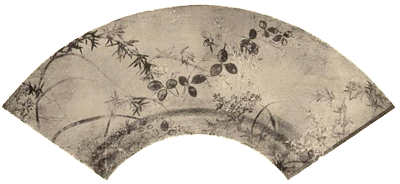
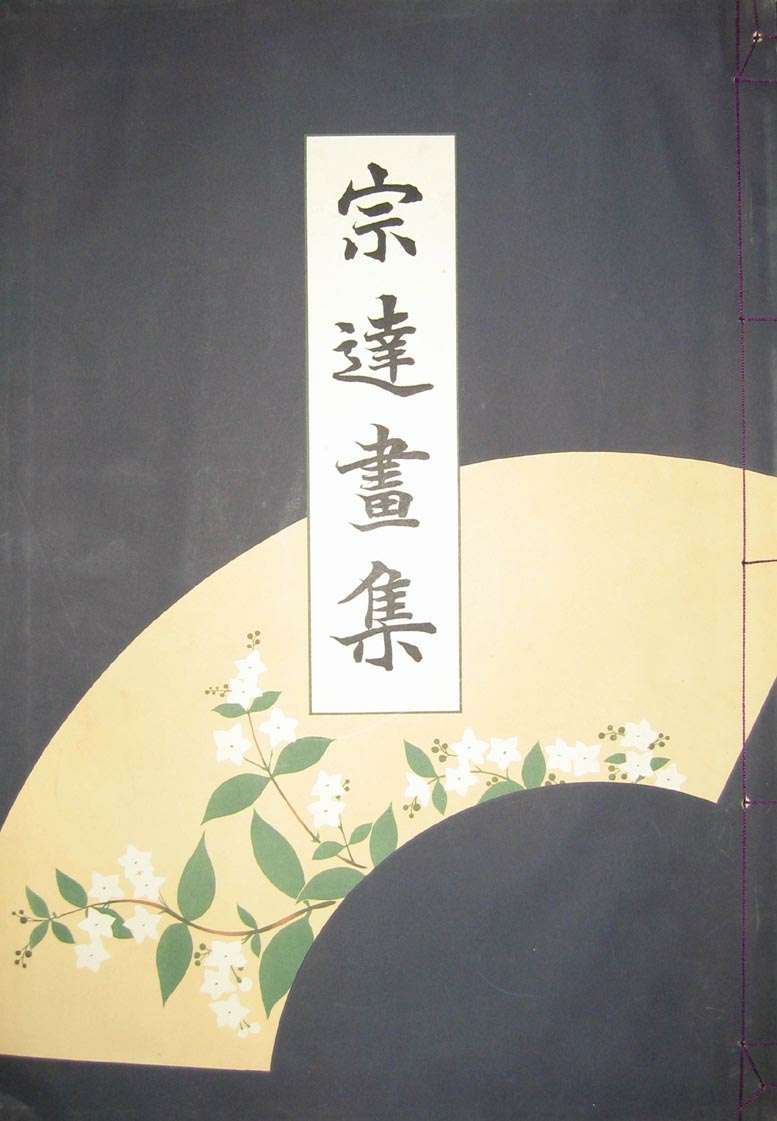
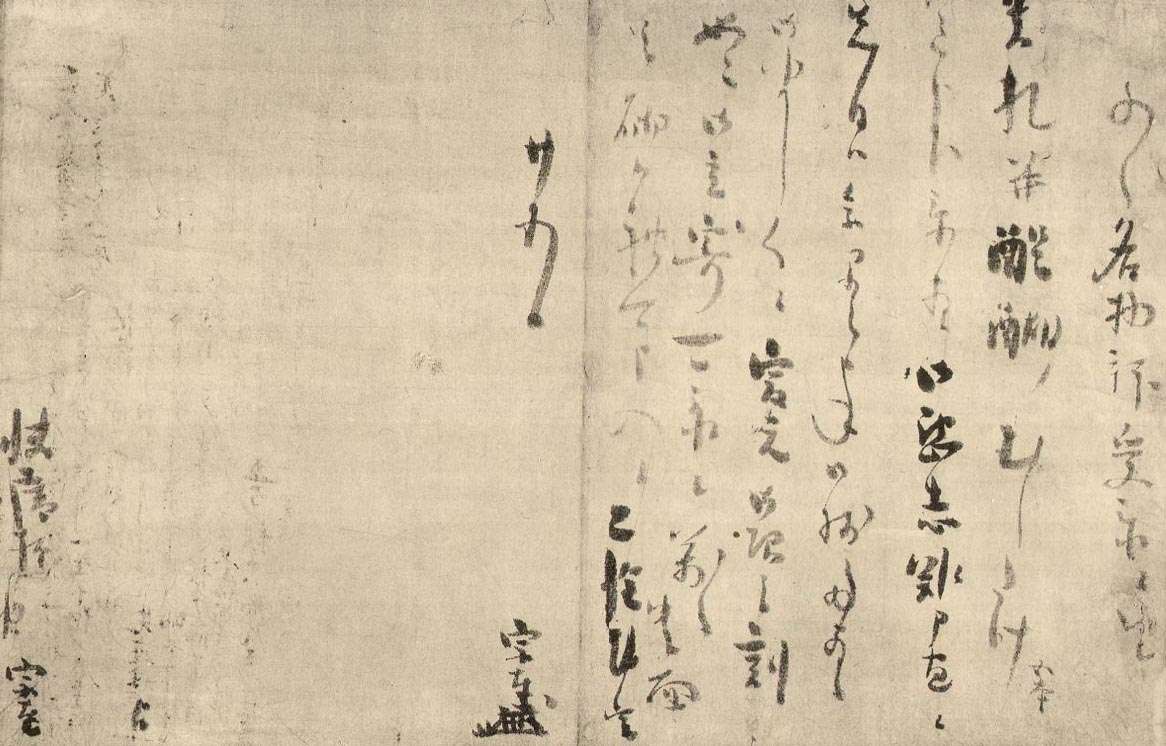
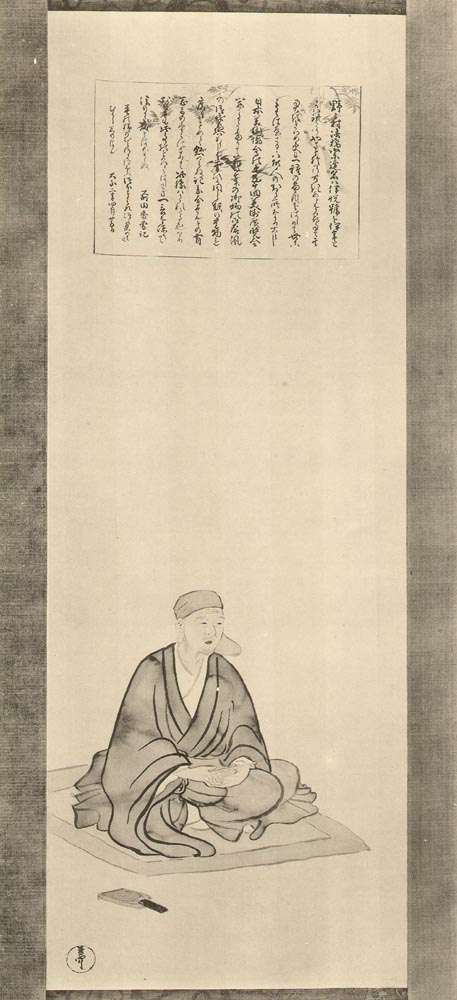
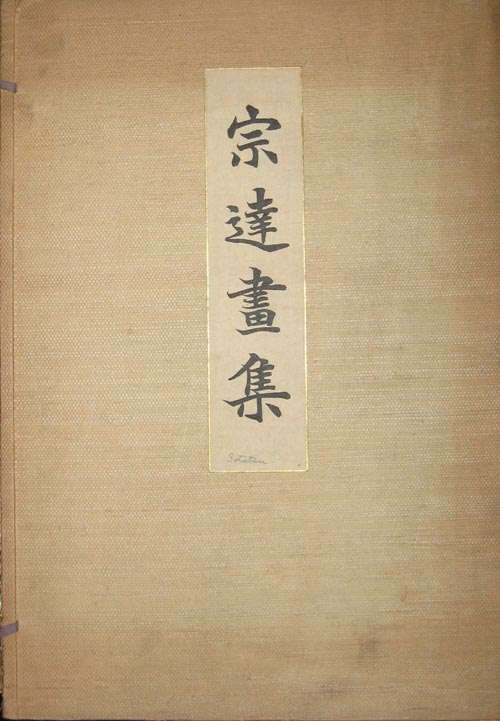
Sotatsu-Gwashu - The Collection of the Works by Sotatsu, Tokyo, The Shimbi Shoin, June 1913, folio (19 x 13 1/2 in - 48.5 x 34 cm), stiff paper covers, front cover illustrated, 2 page introduction in Japanese, 2 frontispiece plates, listing of plates in Japanese and English, 50 plates reproducing Sotatsu's works, string tied, reads Japanese style from back to front. All plates are on thick paper and printed in black and white using the collotype printing process. The two frontispiece plates are printed front and back on a single sheet. All other plates are printed on one side of the sheet only. The plates are grouped and each grouping is preceded by a tissue guard with descriptive information in Japanese and English. This publication was issued to commemorate and exhibition of Sotatsu's work sponsored by the Japan Fine Arts Association and held in 1913. Sotatsu Tawaraya was a 17th century Japanese artist and is said to be the inspiration for the Korin School.
Issued with a straw textured folding case with clasp ties.
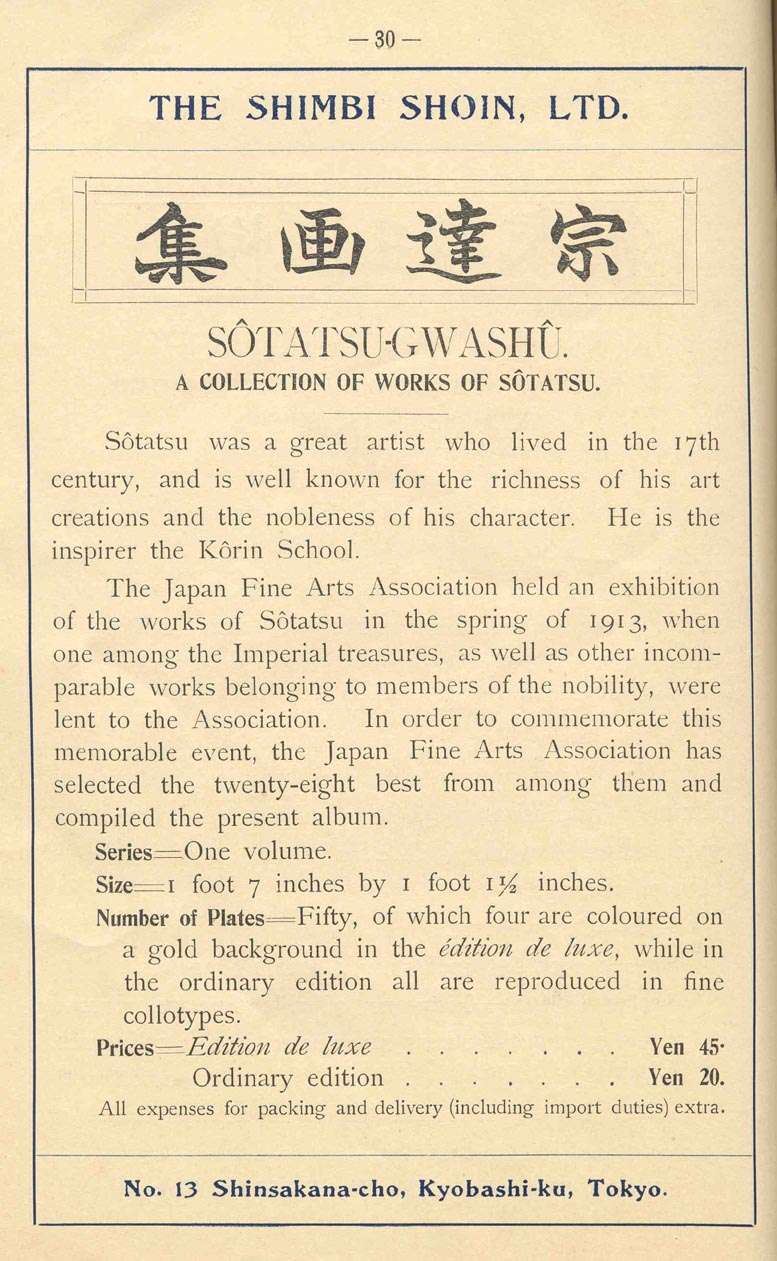
In a 1920 Shimbi Shoin catalogue (and later editions also), this book is described in these terms:
Sotatsu was a great artist who lived in the 17th century, and is well know for the richness of his art creations and the nobleness of his character. He is the inspirer of the Korin School.
The Japan Fine Arts Association held an exhibition of the works of Sotatsu in the spring of 1913, when among the Imperial treasures, as well as other incomparable works belonging to members of nobility, were lent to the Association. In order commemorate this memorable event, the Japan Fine Arts Association has selected twenty-eight best from among them and compiled the present album.
Number of Plates - Fifty, of which four are coloured on a gold background in the edition de luxe, while in the ordinary edition all are reproduced in fine collotypes.
Prices - Edition de luxe .. Yen 45, Ordinary Edition .. Yen 20.
Preliminary Pages
- Title page with Sotatsu-Gwashu in Japanese only
- Japanese text (2 pages printed front and back)
- Two collotype plates (printed front and back)
- Listing of plates in Japanese (2 pages printed front and back)
- Listing of plates in English (printed front side only)
Plates
Frontispiece Plates (2)
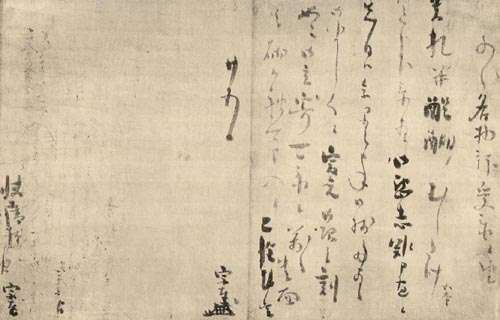
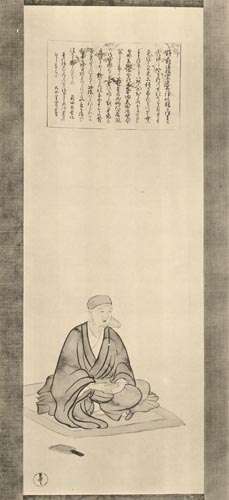 Plates (50) with Examples
Subjects. Number of Plates.
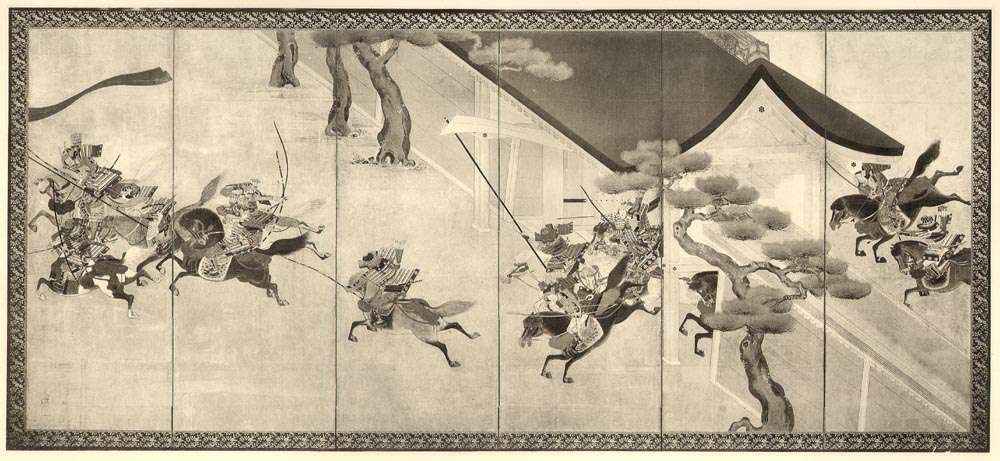
A pair of eight folding screens: Illustrating the battle of Hogen and
Heiji era. Four.
Plates (50) with Examples
Subjects. Number of Plates.
A pair of eight folding screens: Illustrating the battle of Hogen and
Heiji era. Four.
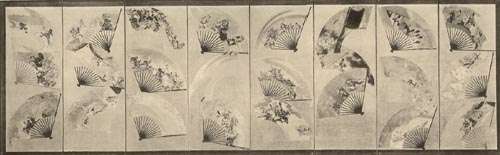 (one of four plates)
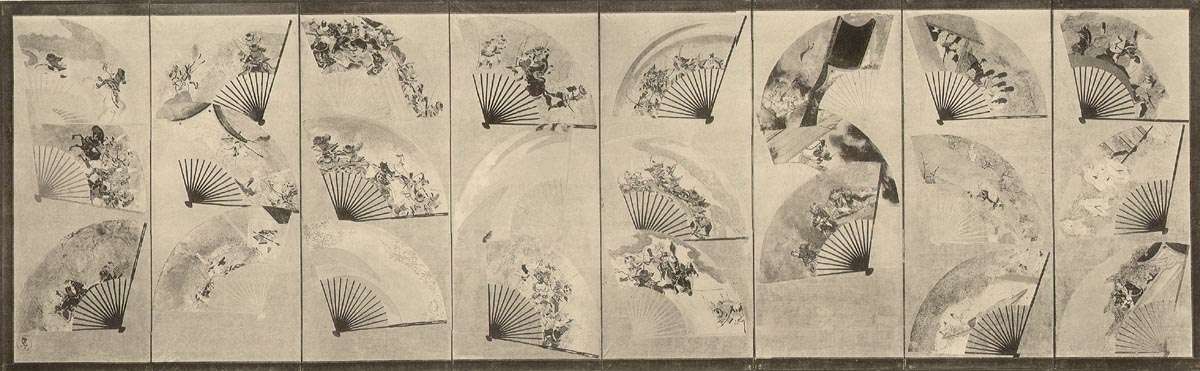
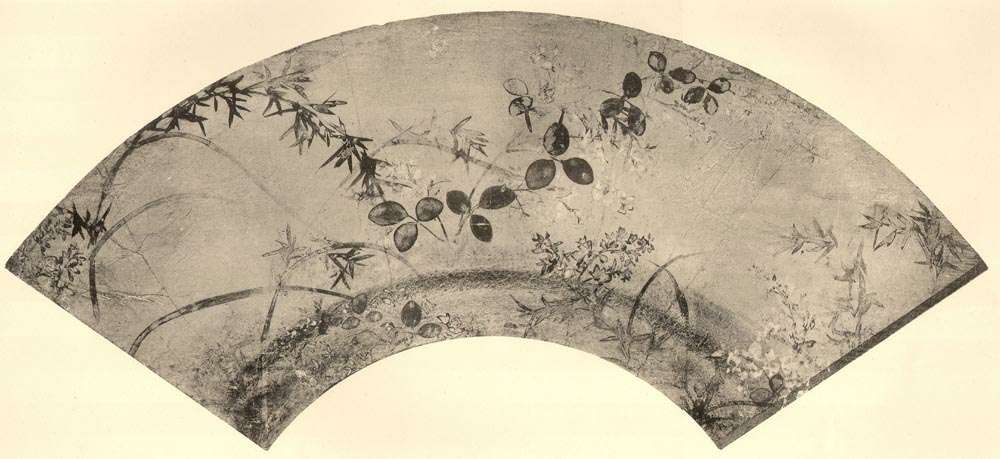
A pair of eight folding screens: Pictures on fan-papers. Three.
(one of four plates)
A pair of eight folding screens: Pictures on fan-papers. Three.
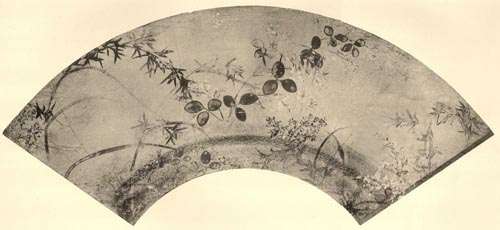 (one of three plates)
A pair of six folding screens on the faces of which, representing waves,
are pasted a number of fan-papers and Skikiski. Four.
Scene from the civil war of Genji and Heike, a pair of six folding screens. Two.
(one of three plates)
A pair of six folding screens on the faces of which, representing waves,
are pasted a number of fan-papers and Skikiski. Four.
Scene from the civil war of Genji and Heike, a pair of six folding screens. Two.
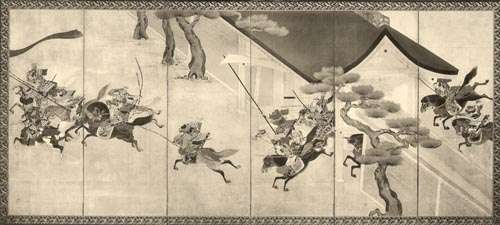 (one of two plates)
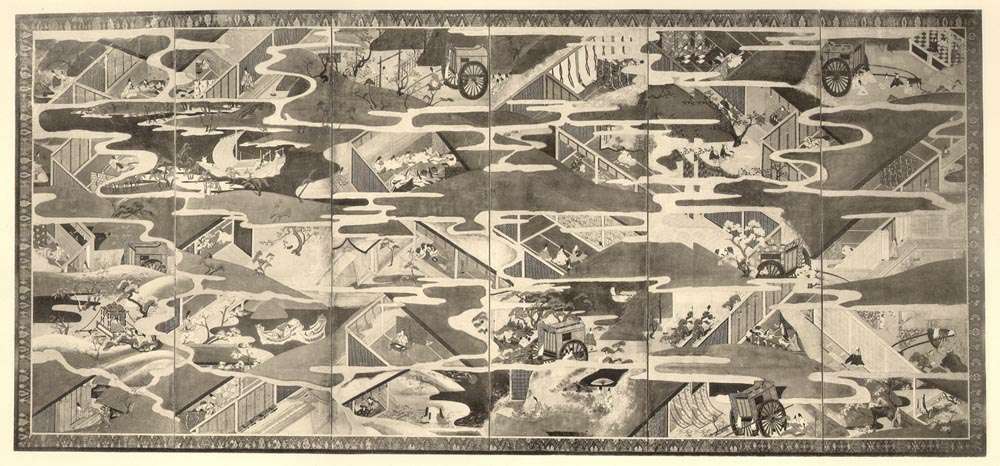
Illustrations to Genji Monogatari, the great novel: a pair of six folding
screens. Four.
(one of two plates)
Illustrations to Genji Monogatari, the great novel: a pair of six folding
screens. Four.
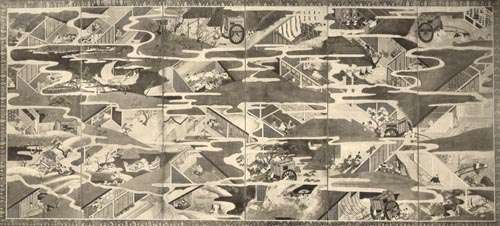 (one of four plates)
Illustration to Genji Monogatari, the great novel: a pair of six folding
screens. Three.
Sekiya; a six folding screen. One.
(one of four plates)
Illustration to Genji Monogatari, the great novel: a pair of six folding
screens. Three.
Sekiya; a six folding screen. One.
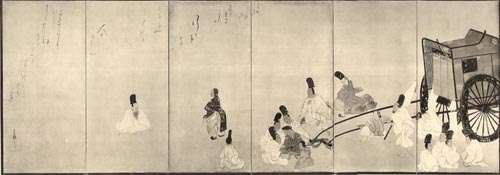 Illustration to Genji Monogatari: Ukifune, eight folding screen. One.
Iko (a stand to hang Kimonos on), a pair of six folding screens. Two.
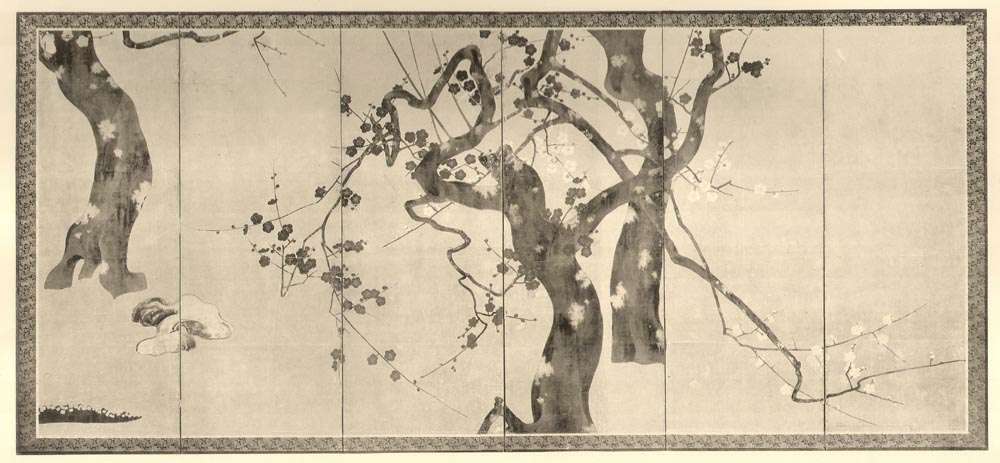
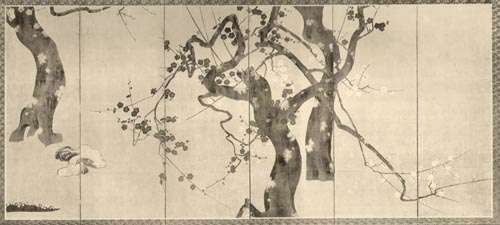
Pink and white plum-blossoms, a pair of six folding screens. Two.
Illustration to Genji Monogatari: Ukifune, eight folding screen. One.
Iko (a stand to hang Kimonos on), a pair of six folding screens. Two.
Pink and white plum-blossoms, a pair of six folding screens. Two.
 (one of two plates)
Flowers of the four seasons, a pair of six folding screens. Two.
Flowers of the four seasons, a six folding screen. One.
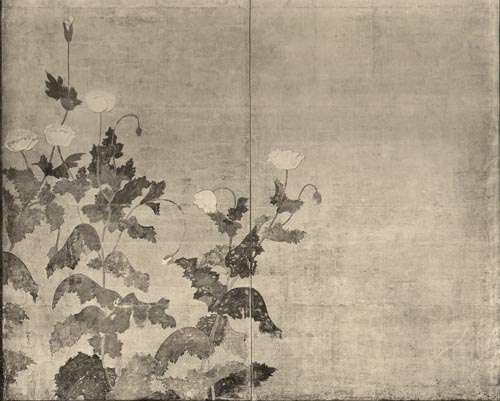
Poppy, a six folding screen. One.
(one of two plates)
Flowers of the four seasons, a pair of six folding screens. Two.
Flowers of the four seasons, a six folding screen. One.
Poppy, a six folding screen. One.
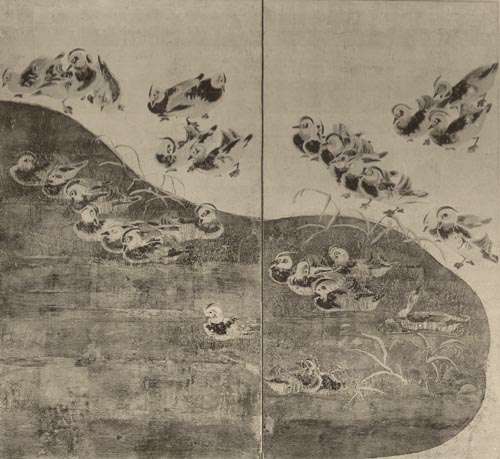
 Mandarin ducks, a two folding screen. One.
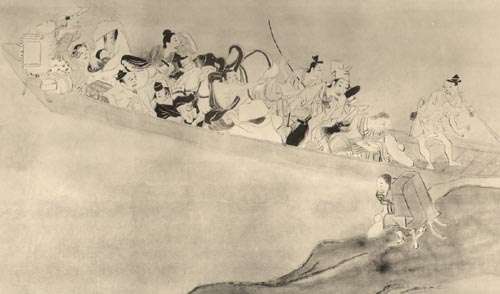
 Saigyo Monogatari Yemakimono, and a part of it. Five.
 (one of five plates)
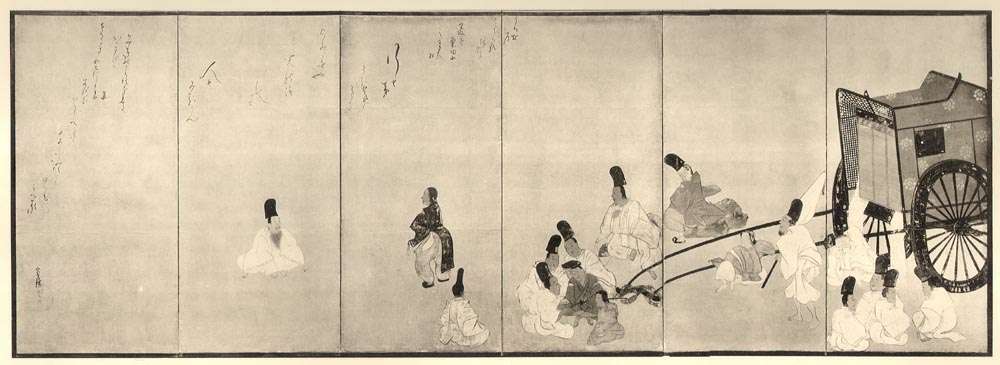
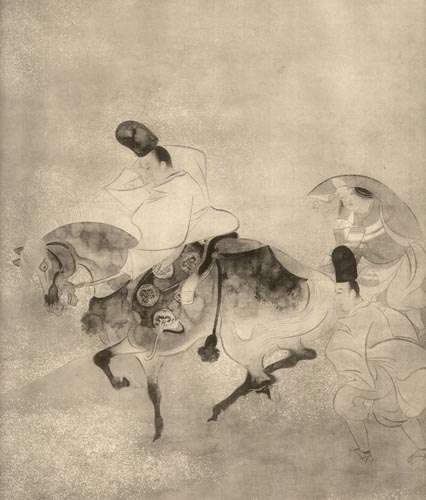
Three scenes from Ise Monogatari. Three.
(one of five plates)
Three scenes from Ise Monogatari. Three.
 (one of three plates)
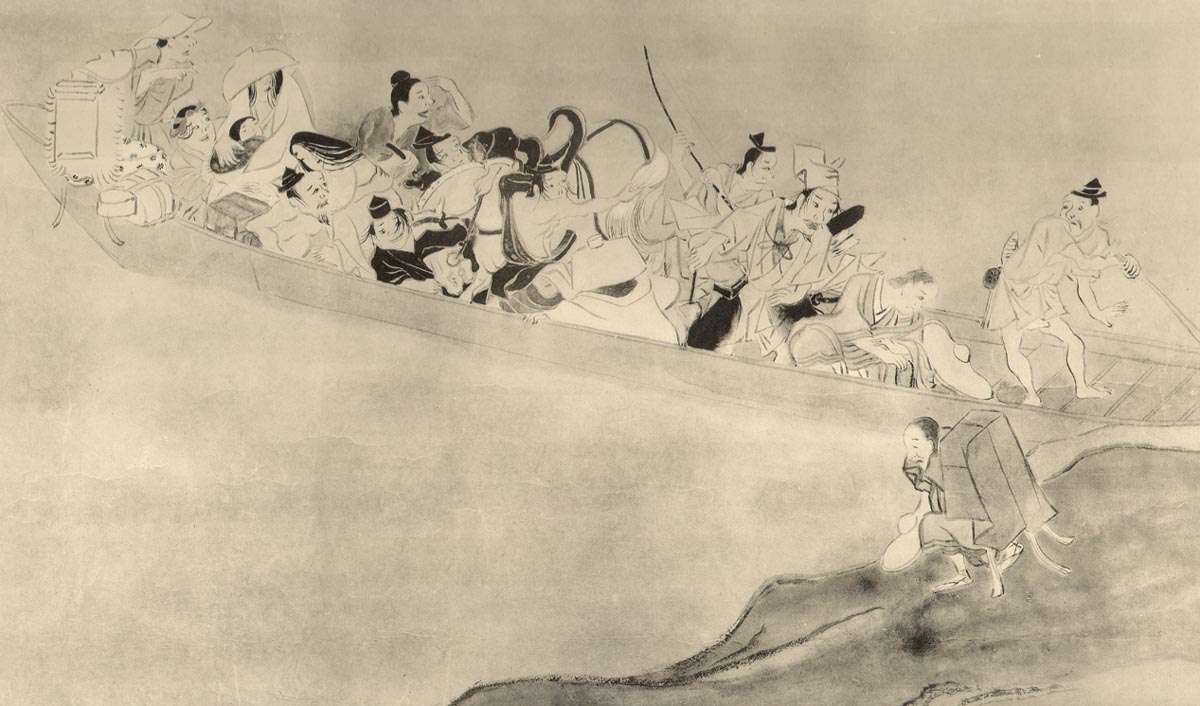
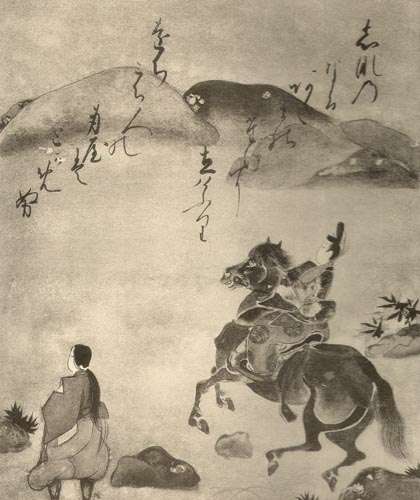
Sano no watari. One.
(one of three plates)
Sano no watari. One.
 Priest Kensu. One.
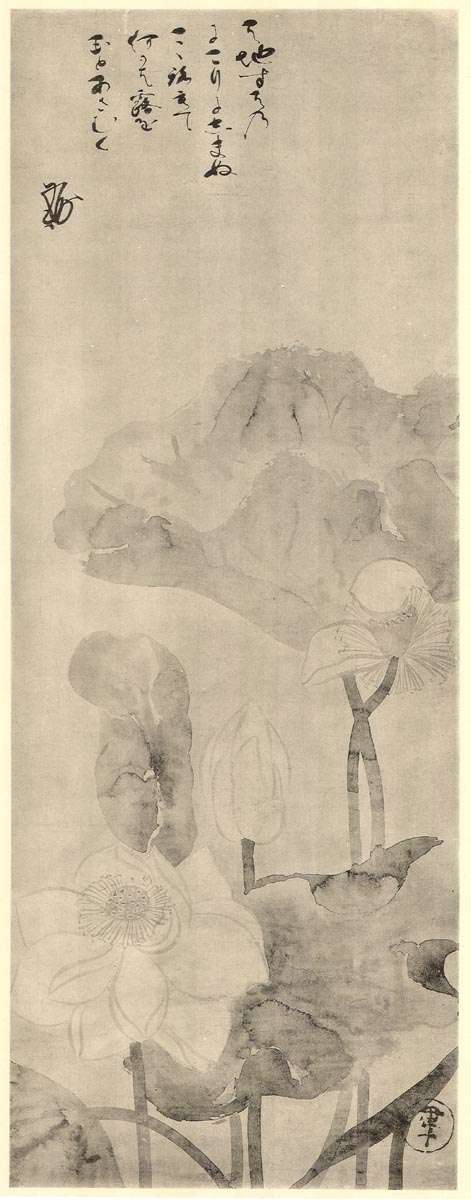
Rendering his spirit on a lotus flower. One.
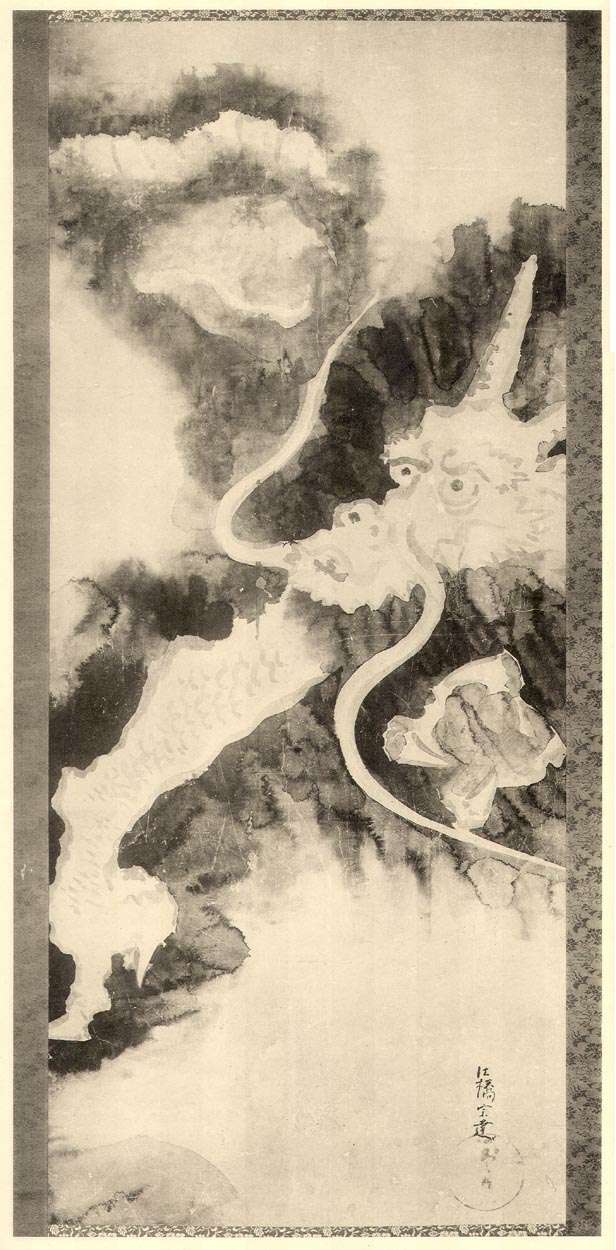
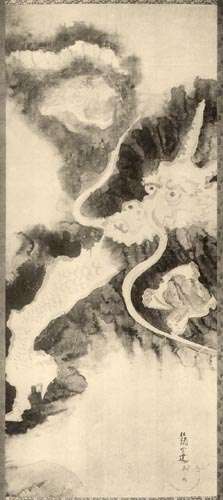
Dragon. One.
Priest Kensu. One.
Rendering his spirit on a lotus flower. One.
Dragon. One.
 Bull One.
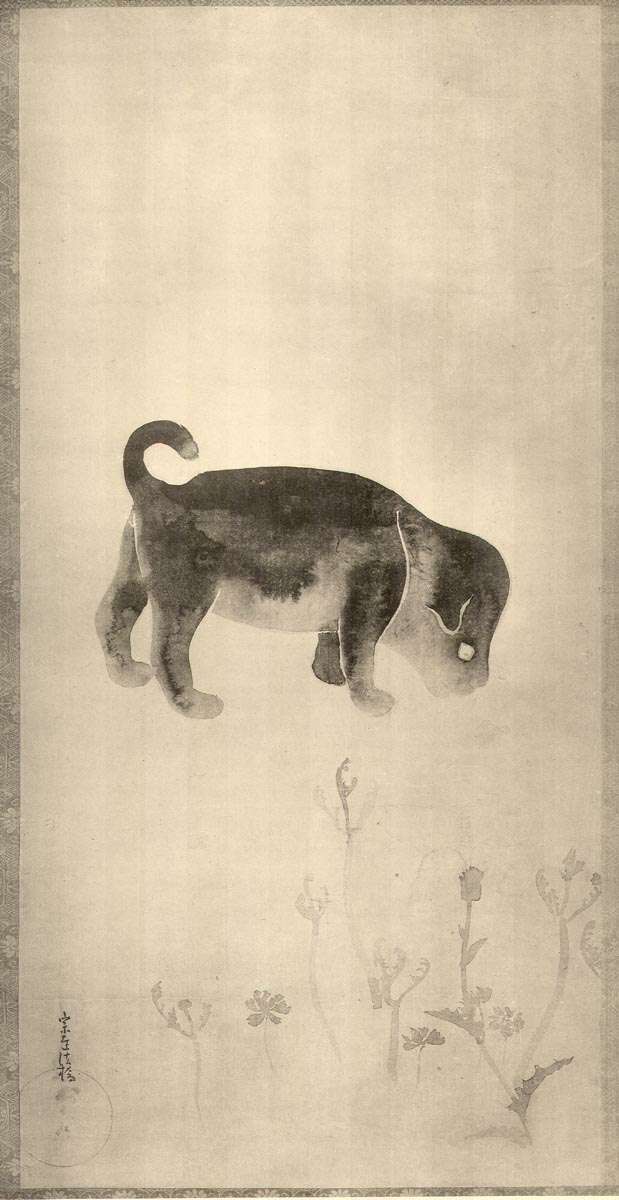
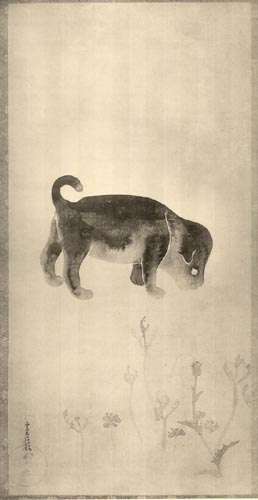
Puppy and grass. One.
Bull One.
Puppy and grass. One.
 Rabbit in autumn. One.
Sparrow on a bamboo. One.
An Owl on a bamboo. One.
A couple of water-fowls and lotus flowers One.
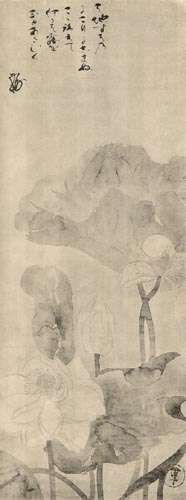
Lotus flowers One.
Rabbit in autumn. One.
Sparrow on a bamboo. One.
An Owl on a bamboo. One.
A couple of water-fowls and lotus flowers One.
Lotus flowers One.
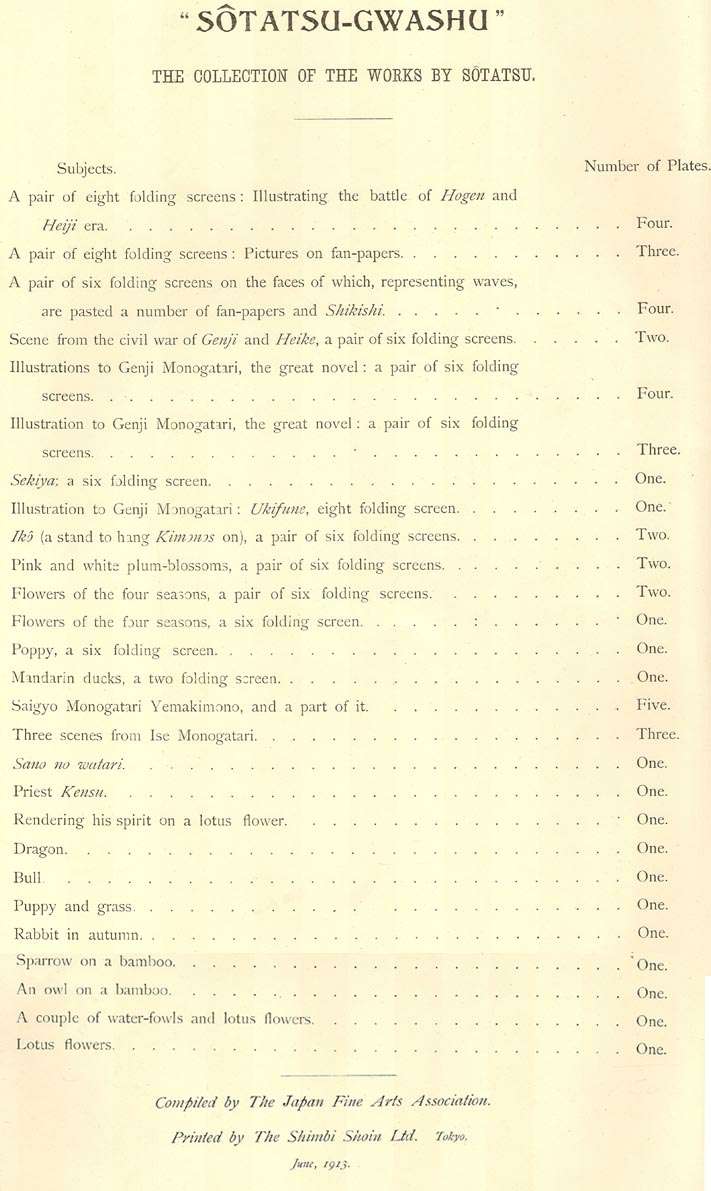
 Listing of Plates (English) without Pics
Subjects. Number of Plates.
A pair of eight folding screens: Illustrating the battle of Hogen and
Heiji era. Four.
A pair of eight folding screens: Pictures on fan-papers. Three.
A pair of six folding screens on the faces of which, representing waves,
are pasted a number of fan-papers and Skikiski. Four.
Scene from the civil war of Genji and Heike, a pair of six folding screens. Two.
Illustrations to Genji Monogatari, the great novel: a pair of six folding
screens. Four.
Illustration to Genji Monogatari, the great novel: a pair of six folding
screens. Three.
Sekiya; a six folding screen. One.
Illustration to Genji Monogatari: Ukifune, eight folding screen. One.
Iko (a stand to hang Kimonos on), a pair of six folding screens. Two.
Pink and white plum-blossoms, a pair of six folding screens. Two.
Flowers of the four seasons, a pair of six folding screens. Two.
Flowers of the four seasons, a six folding screen. One.
Poppy, a six folding screen. One.
Mandarin ducks, a two folding screen. One.
Saigyo Monogatari Yemakimono, and a part of it. Five.
Three scenes from Ise Monogatari. Three.
Sano no watari. One.
Priest Kensu. One.
Rendering his spirit on a lotus flower. One.
Dragon. One.
Bull One.
Puppy and grass. One.
Rabbit in autumn. One.
Sparrow on a bamboo. One.
An Owl on a bamboo. One.
A couple of water-fowls and lotus flowers One.
Lotus flowers One.
Total: Fifty
Listing of Plates (English) without Pics
Subjects. Number of Plates.
A pair of eight folding screens: Illustrating the battle of Hogen and
Heiji era. Four.
A pair of eight folding screens: Pictures on fan-papers. Three.
A pair of six folding screens on the faces of which, representing waves,
are pasted a number of fan-papers and Skikiski. Four.
Scene from the civil war of Genji and Heike, a pair of six folding screens. Two.
Illustrations to Genji Monogatari, the great novel: a pair of six folding
screens. Four.
Illustration to Genji Monogatari, the great novel: a pair of six folding
screens. Three.
Sekiya; a six folding screen. One.
Illustration to Genji Monogatari: Ukifune, eight folding screen. One.
Iko (a stand to hang Kimonos on), a pair of six folding screens. Two.
Pink and white plum-blossoms, a pair of six folding screens. Two.
Flowers of the four seasons, a pair of six folding screens. Two.
Flowers of the four seasons, a six folding screen. One.
Poppy, a six folding screen. One.
Mandarin ducks, a two folding screen. One.
Saigyo Monogatari Yemakimono, and a part of it. Five.
Three scenes from Ise Monogatari. Three.
Sano no watari. One.
Priest Kensu. One.
Rendering his spirit on a lotus flower. One.
Dragon. One.
Bull One.
Puppy and grass. One.
Rabbit in autumn. One.
Sparrow on a bamboo. One.
An Owl on a bamboo. One.
A couple of water-fowls and lotus flowers One.
Lotus flowers One.
Total: Fifty
Colophon
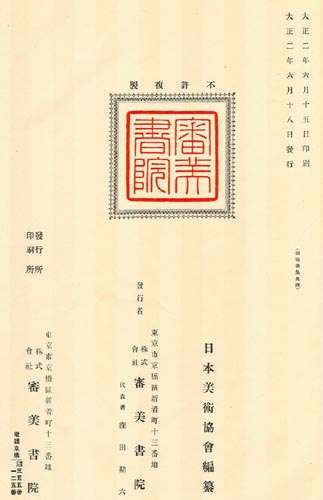
Printed: Taisho 2 (1913).6.15
Published: Taisho 2 (1913).6.18
|