|
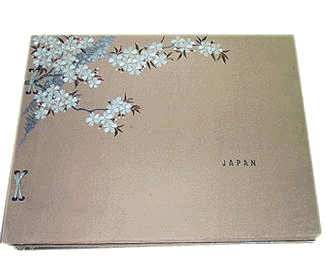
Condition. The book is in Good condition. The board on the front cover is separated. However, it is not detached as the silk covering remains unbroken. The bottom cord tie is broken and partially missing. All 50 plates are present. The plates are clean. A couple have smudges in the margin. No foxing or staining on the plates.
Ogawa, K. (Kazumasa)
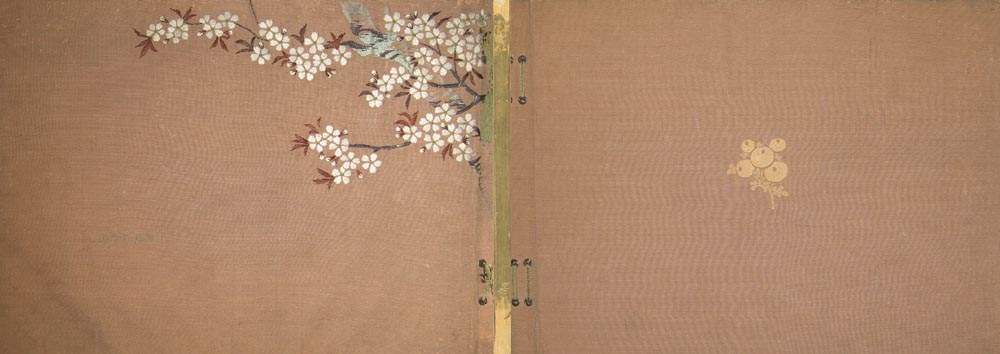
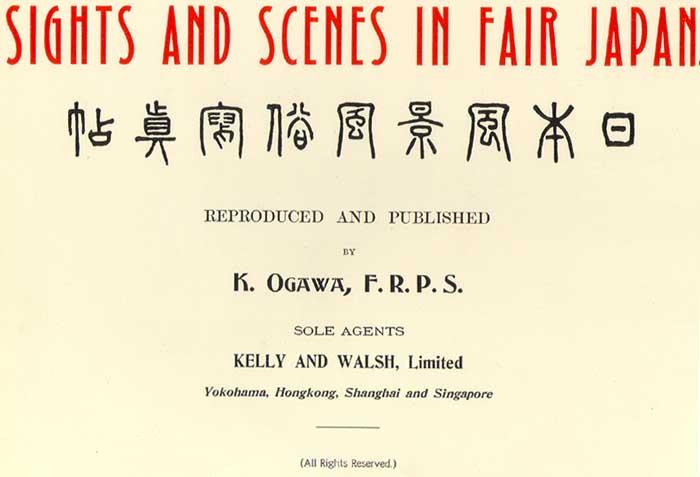
Sights and Scenes in Fair Japan, Reproduced and Published by K. Ogawa, F.R.P.S, Yokohama, Ogawa, Kelly & Walsh, Taisho 6 (1917), large oblong 4to (10 1/2 x 14 3/4 in - 37.5 x 26.5 cm), silk covers, cord ties, front cover with embroidered flowers and bird design, gilt edges, 50 collotype plates (16 color and 34 black and white), no maps, organized in typical Japanese style from back to front. No text, just collotype plates printed on one side only of high quality thick card stock paper. The 16 color collotype (multi-pass color collotypes) images all have a thin white border. Each plate measures 10 1/4 x 13 1/2 in - 26 x 35 cm. Image areas vary slightly but are generally 7 x 10 3/8 in - 26 x 35 cm. The collotype type plates cover a wide range of views in Japan with an emphasis on scenic, religious and historic places. Each plate has a descriptive title in Japanese and English. More comprehensive explanatory comments are also provided in English on each plate. While published in 1917, this is a later printing of a book that was first published at the turn of the century and captures views of Japan as the country passed into the 20th century.
Publishing/Printing History (1910~17 per colophon in this book). The colophon does not account for the second printing.
- 1905 - First published by the Imperial Government Railways, 50 color collotypes and 2 color maps
- 1910 - first printing, (published by Kelly & Walsh with 50 color collotypes)
- ???? - second printing, not accounted for in the colophon
- 1916 - third printing.
- 1917 - fourth printing (this book).
I note a version (no date given) of this book offered with 50 black and white collotypes and in a Western format (reading front to back).
For information on Kazumasa Ogawa, click here.
To see the title page, click here.
* = 16 (of 50) Color Collotype Plates(multi-pass color collotypes)
All others Black and White Collotype Plates.
- The Main Entrance (double bridge) to the Imperial Palace, Tokyo
- Uyeno Park, Tokyo -- When the Cherry Blossom Blows
- Shinobuzu Pond, Tokyo, Famous Lotus Flowers
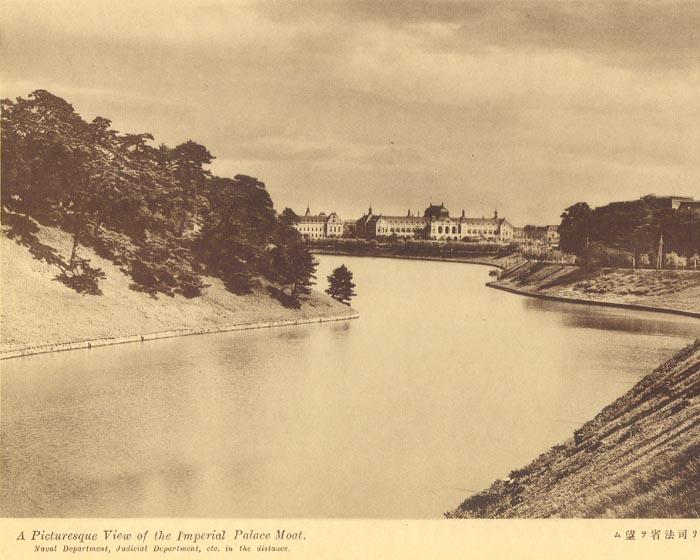
- A Picturesque View of the Imperial Palace Moat (Naval Dept & Judicial Dept)
- Entrance to Mausolea of the Tokugawa Shoguns in Tokyo
- Under the Wisteria Arbour -- In the Grounds of the Kameido, Temmangu Shrine, Tokyo
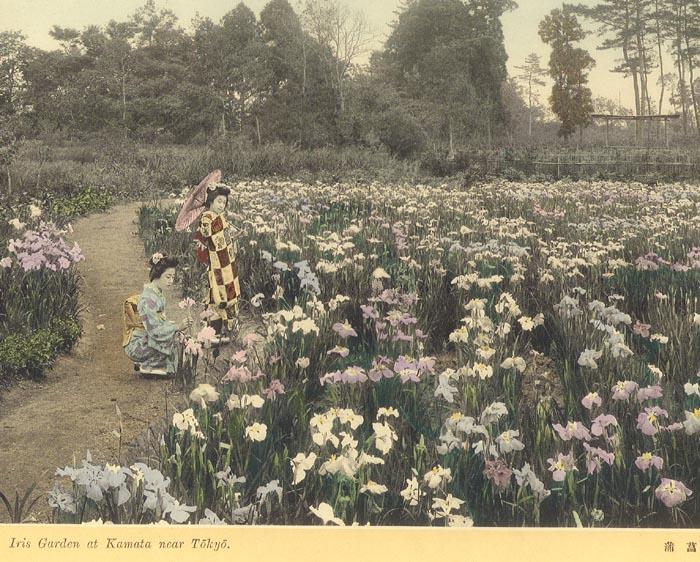
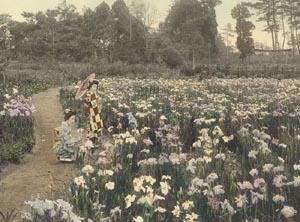
- *Iris Garden at Kamata near Tokyo
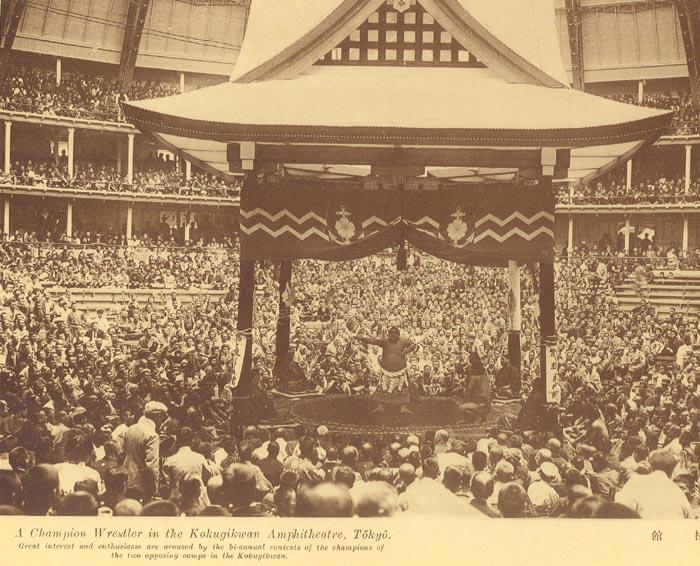
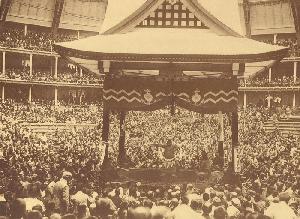
- A Champion Wrestler in the Kokugikwan Amphitheatre, Tokyo
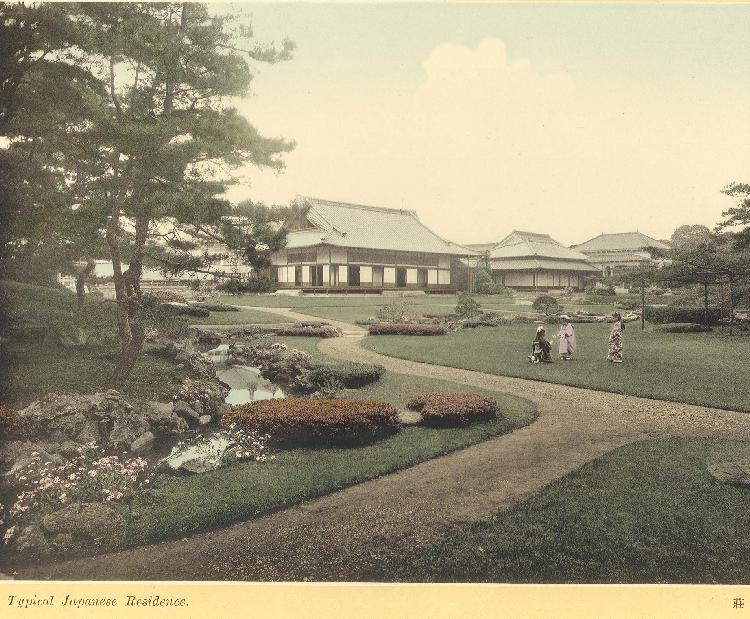
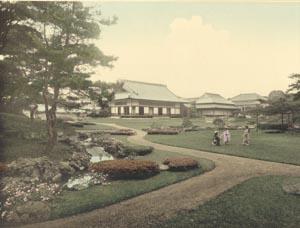
- *Typical Japanese Residence
- Typical Reception Room in a Wealthy Home
- The "Daibutsu," or Gigantic Bronze Statue of Buddha at Kamakura, Erected in 1252
- Enoshima, near Kamakura, a Picturesque Island and Popular Excursion Resort
- Miyanoshita, a Favourite Hot Spring Resort in the Hakone Mountains
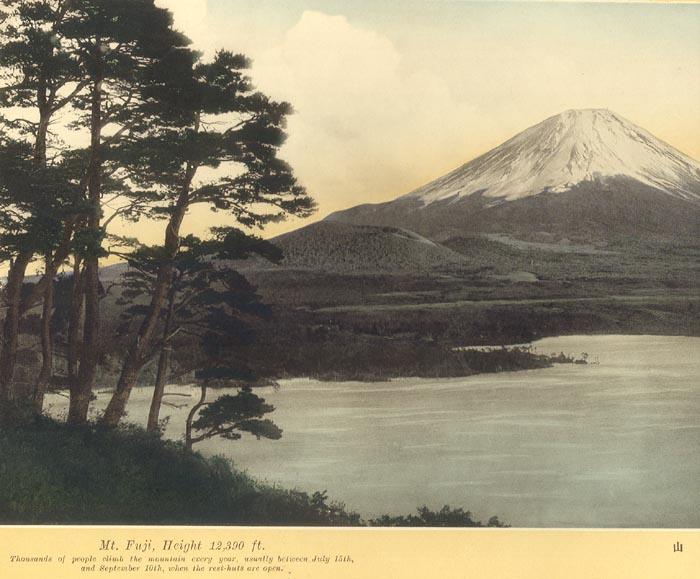
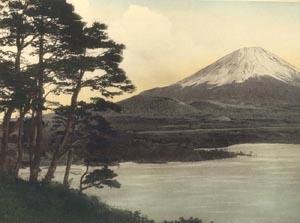
- *Mt Fuji, Height 12,390 ft
- Display of Dolls and Toys on the Girls' Festival in March
- Display of Miniature Armour and Toys on the Boy's Festival in May
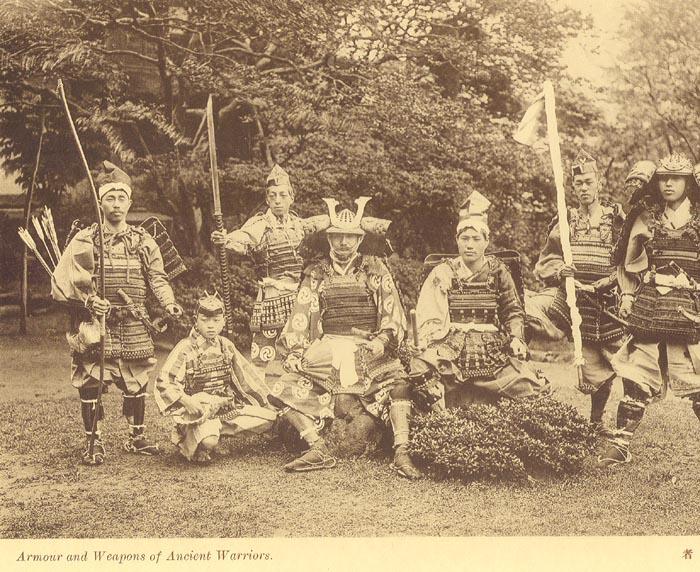
- Armour and Weapons of Ancient Warriors
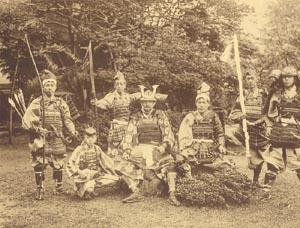
- Grand Shrine of Ise, Sacred to the Imperial Family and the People
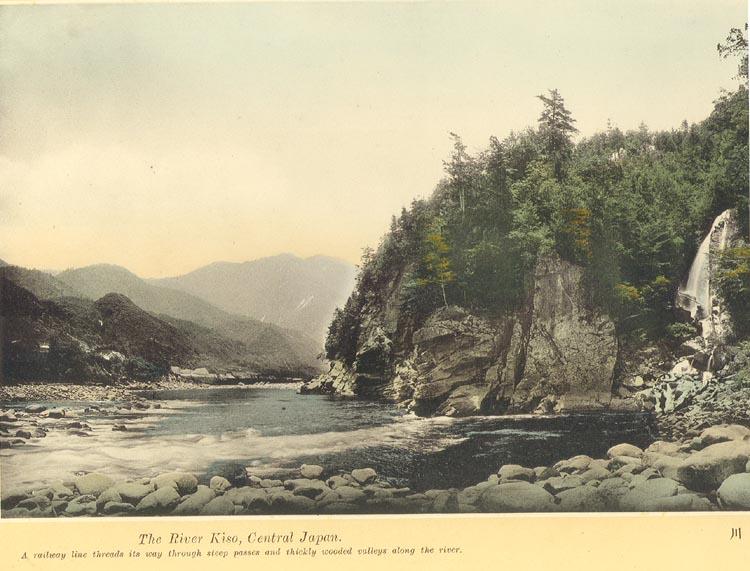
- *The River Kiso, Central Japan
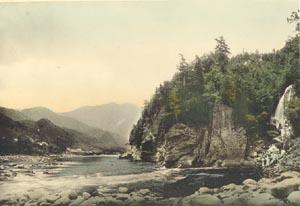
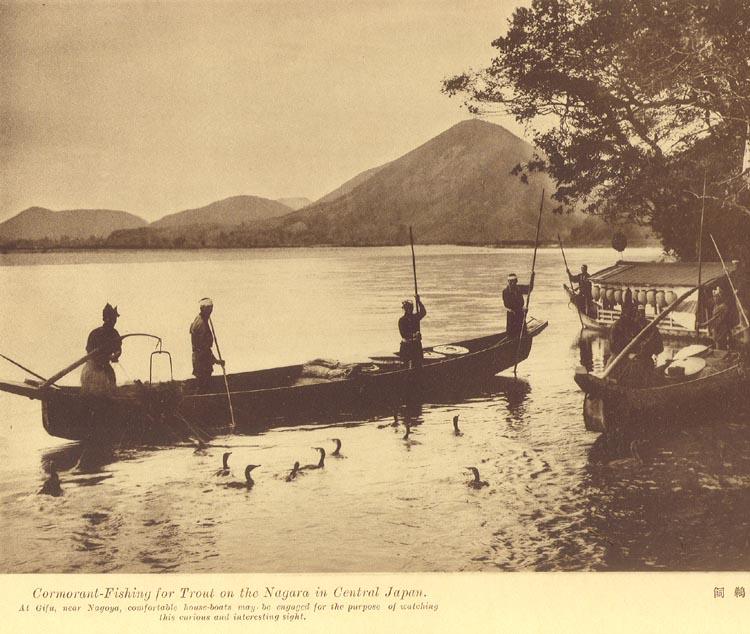
- Cormorant-Fishing for Trout on the Nagara in Central Japan
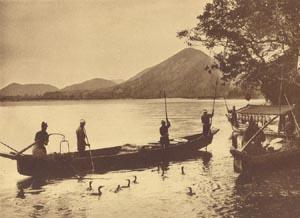
- *Lake Biwa, near Kyoto, the Largest Lake in Japan and Noted for its Characteristic Scenery
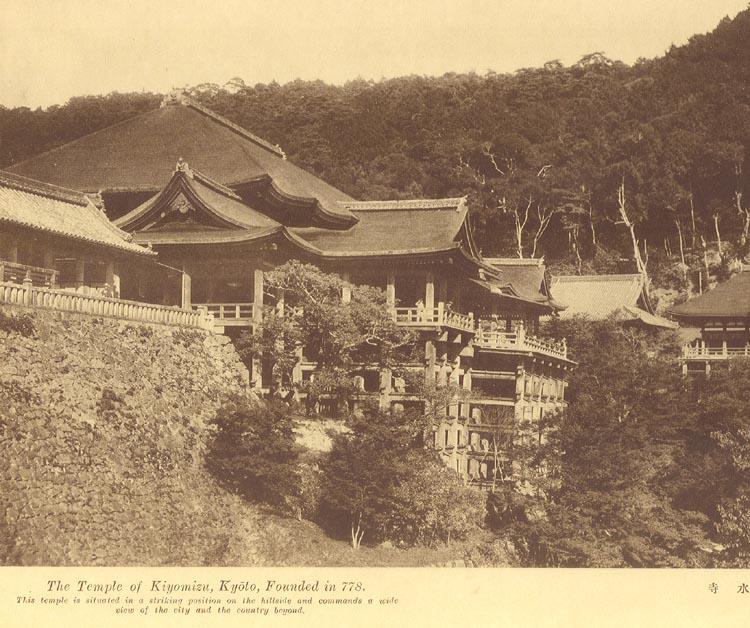
- The Temple of Kiyomizu, Kyoto, Founded in 778
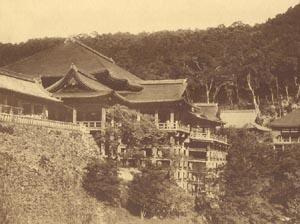
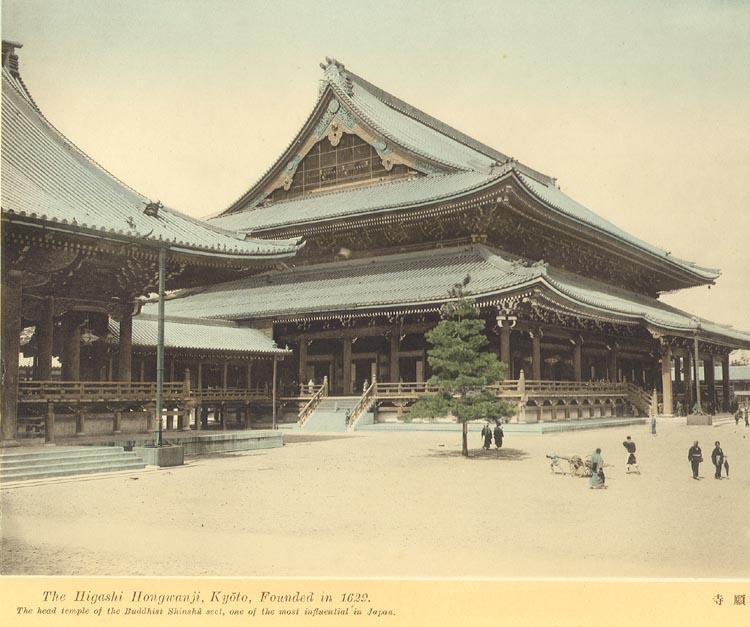
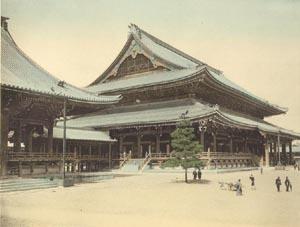
- *The Higashi Hongwanji, Kyoto, Founded in 1629
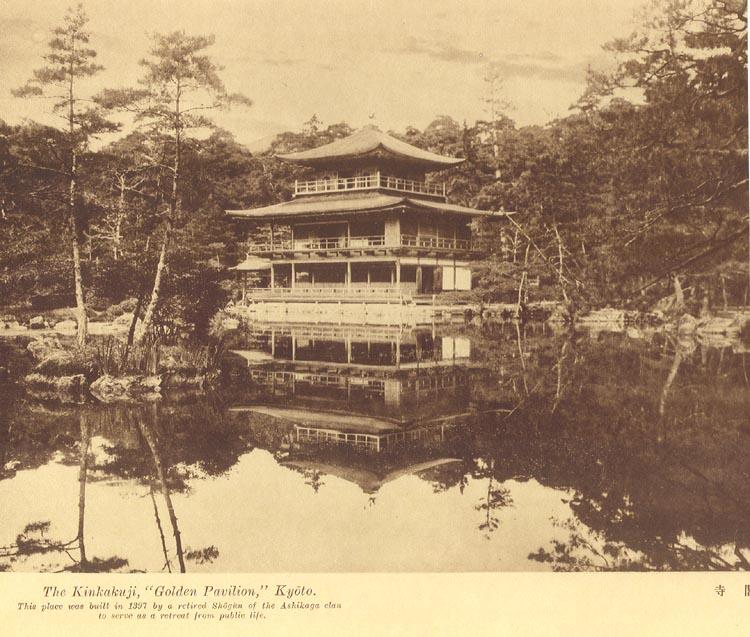
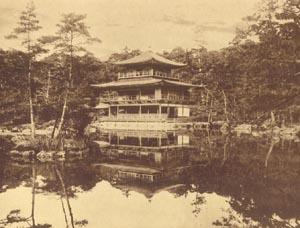
- Kikakuji, "Golden Pavilion," Kyoto
- Enjoying the Cool of a Summer Evening on the Kamogawa in Kyoto
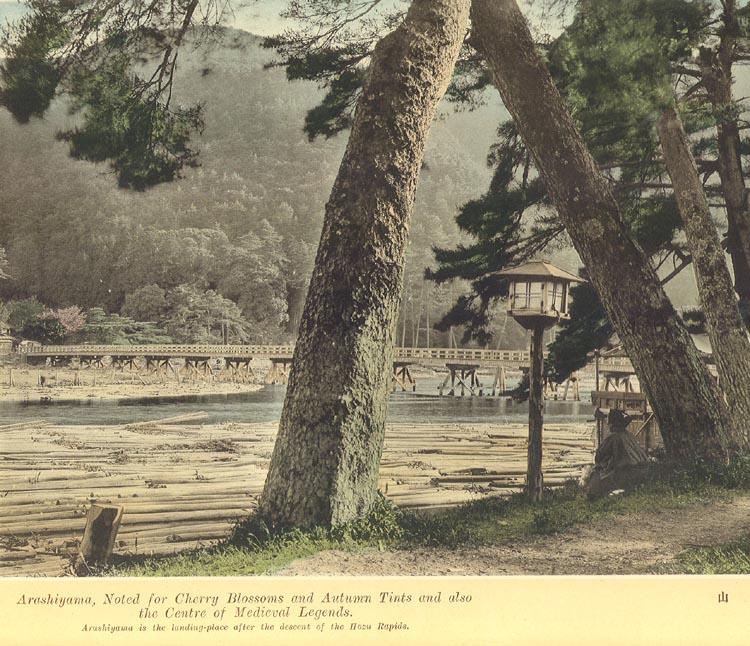
- *Arashiyama, Noted for Cherry Blossoms and Autumn Tints and also the Centre of Medieval Legends
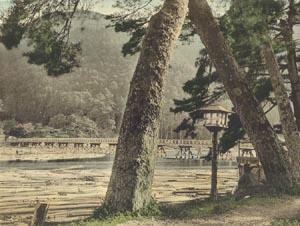
- *Descent of the Hozu Rapids near Kyoto
- The Glories of Autumn -- Maples at Toganoo near Kyoto
- Peony Beds
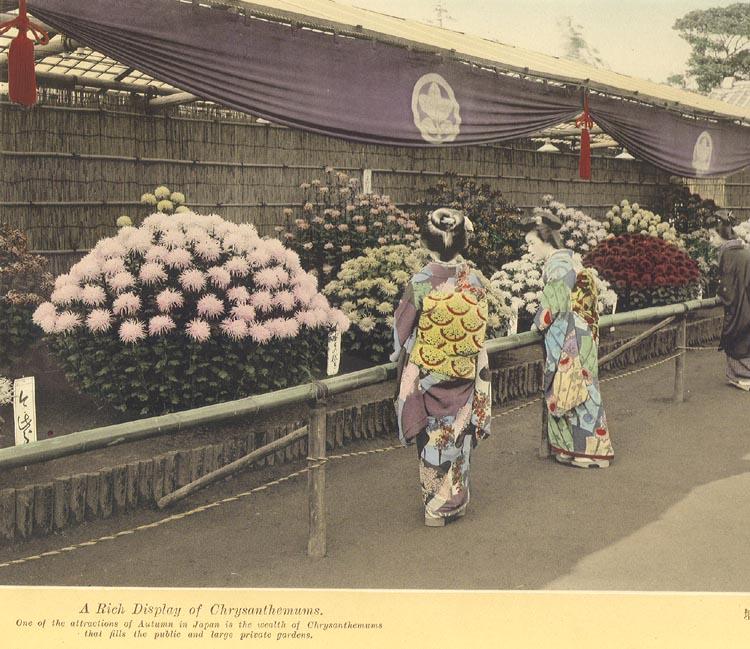
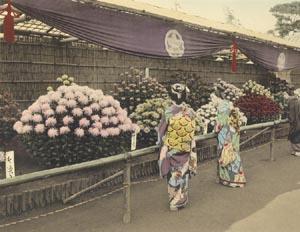
- *A Rich Display of Chrysanthemums
- A Tea-Plantation with Tea Pickers at Work
- *Entrance to the Ksuga Shrine, Nara
- *Horyuki, near Nara, Built in 607, the Most Ancient Buddhist Temple in Japan
- Playing the "Koto," the Most Widely Used Form of Domestic Musical Instrument
- *Typical Japanese Garden.
- The "Ikebana" or Flower Arrangement, One of the Esthetic Arts of Japan
- *The "Chanoyu" or Tea-Ceremony, One of the Esoteric Arts of Japan
- Ama-no-hashidate, Central Japan, One of the Three Most Beautiful Sights in this Country
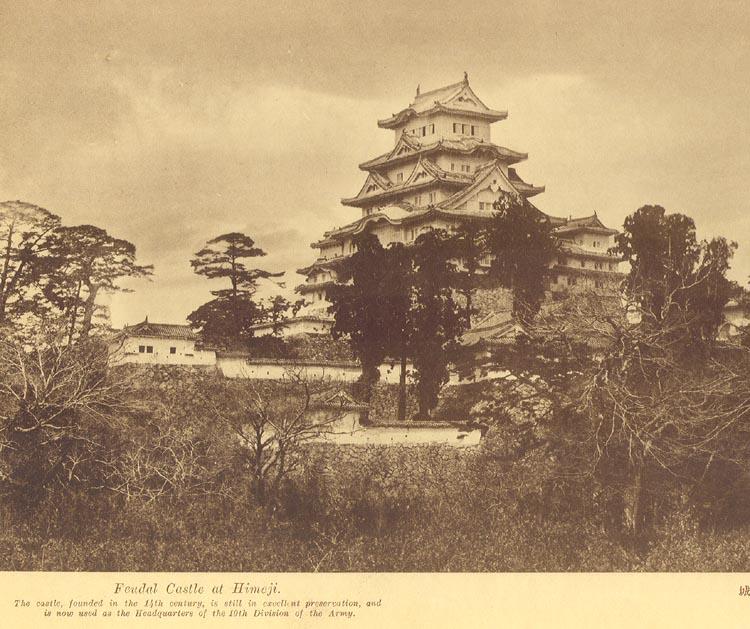
- Feudal Castle at Himeji
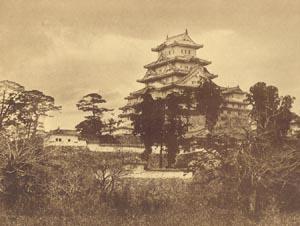
- A Glimpse of the Island Sea; near Onomichi
- *Miyajima, a Sacred Island in the Inland Sea, One of the Three Most Beautiful Sights in This Country
- The "No," a Species of Lyric Drama of a Classical Nature
- The "Odori," a Dramatic Dance in Old Time Costume
- *Matsushima, in Northern Japan, One of the Three Most Beautiful Sights in This Country
- A Characteristic Japanese Dance
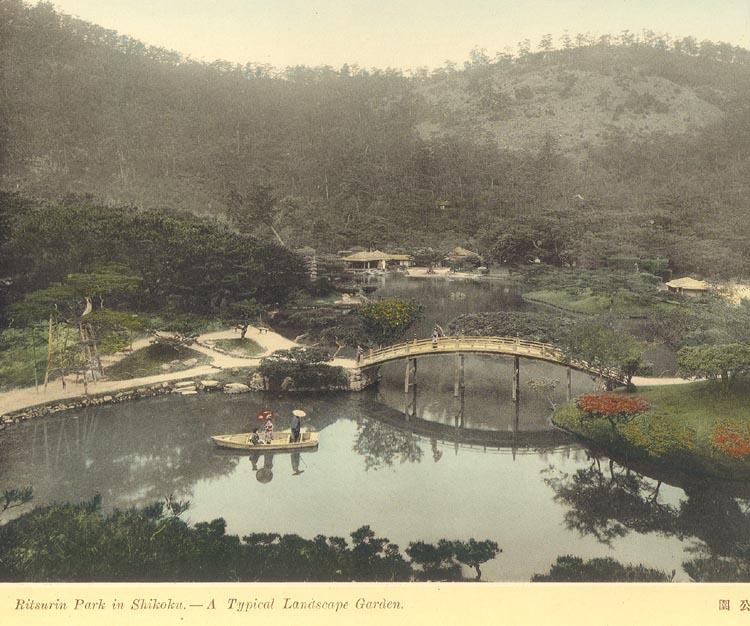
- *Ritsurin Park in Shikoku -- A Typical Landscape Garden
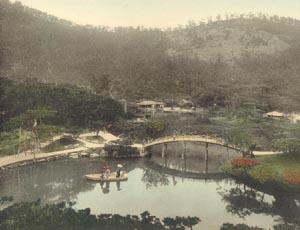
- In the Grounds of the Nikko Shrines, Founded in 1617
- Avenue of Crytomerias near Nikko
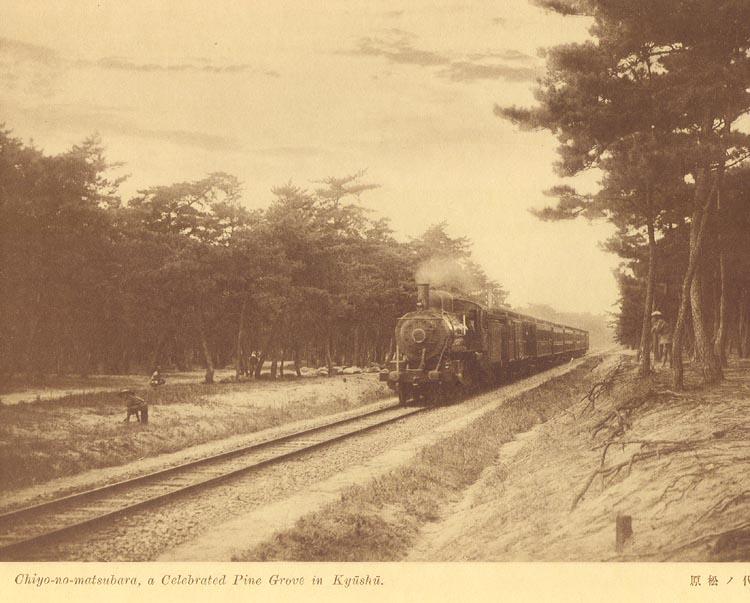
- Chiyo-no-matsubara, a Celebrated Pine Grove in Kyushyu (Pic of Steam Train)
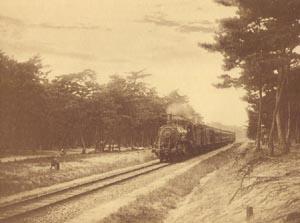
- Mt. Aso and Active Volcano in Kyushu
Because of scanner limitations, the right hand side of each picture is one inch shorter than the actual image.
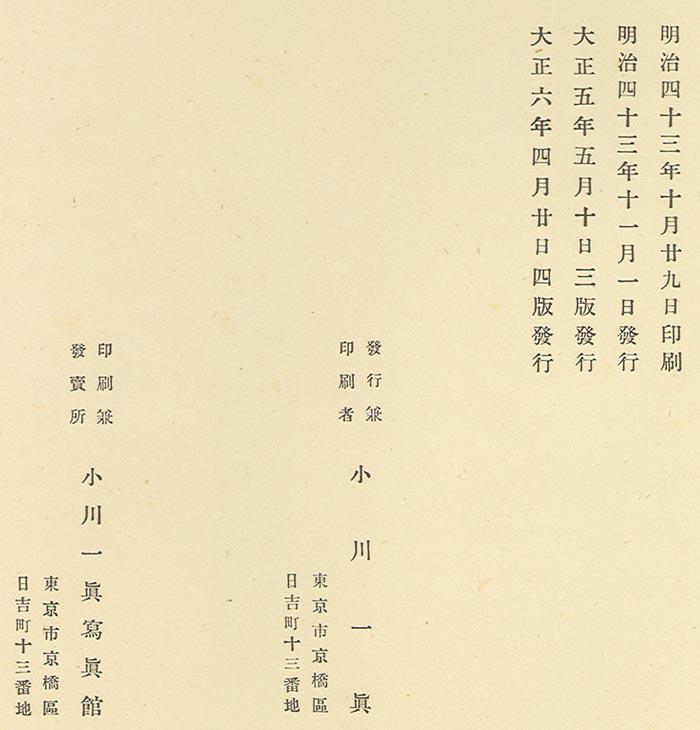
Colophon
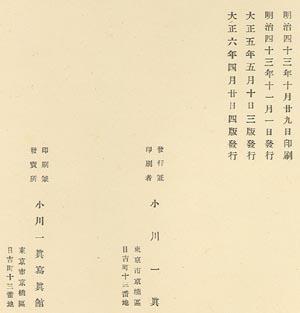
Printed - 1910 (Meiji 43).10.28
First Distribution - 1910 (Meiji 43).11.1
Third Printing - 1916 (Taisho 5).5.10
Fourth Printing - 1917 (Taisho 6).4.20
Cover from the edition with
50 black and white collotypes
Date Unknown.
|